I Watched Dropshipping Die. Now I'm Watching AI Make the Same Mistakes.
I Watched Dropshipping Die. Now I'm Watching AI Make the Same Mistakes.
And here's what happens when amateurs flood billion-dollar markets with good intentions and zero strategy.
And here's what happens when amateurs flood billion-dollar markets with good intentions and zero strategy.
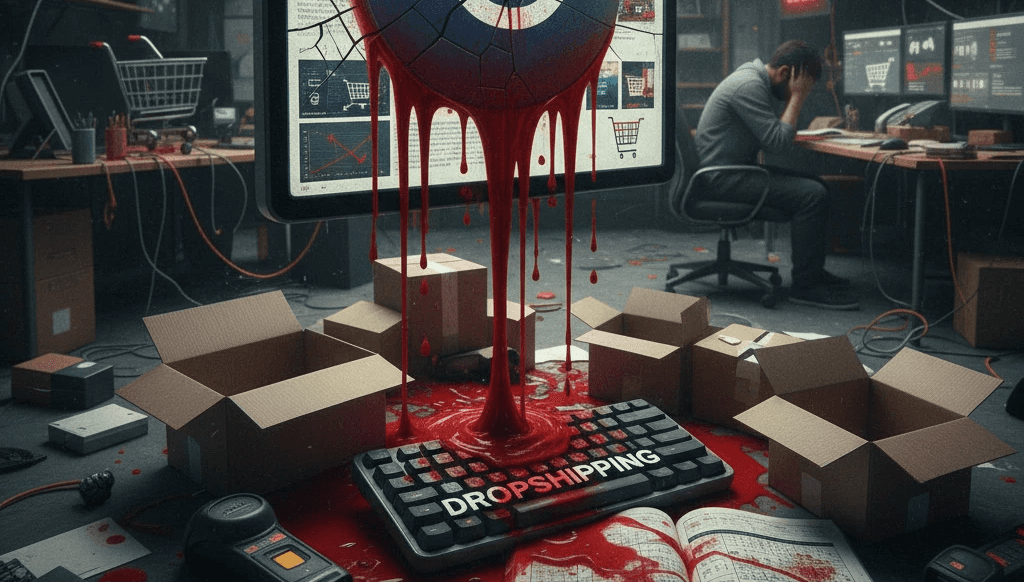
I need to tell you about a pattern I've witnessed repeat itself four times in the last fifteen years.
Each time, the technology was different.
Each time, the promise was the same: a democratized path to wealth that would level the playing field for ordinary people.
And each time, I watched thousands of enthusiastic amateurs flood the market, burn it to the ground, and leave behind a graveyard of broken promises and institutional skepticism that took years to recover from.
First it was affiliate marketing.
Then dropshipping.
Then cryptocurrency and NFTs.
Then the explosion of infoproducts and online courses.
Now it's AI.
And if we don't understand what actually happened in those previous cycles, we're about to repeat the most expensive mistake in the history of technological innovation.
Here's the uncomfortable truth that nobody wants to say out loud:
these markets didn't fail because the technology was bad or the business model was flawed.
They failed because tens of thousands of people with identical strategies, shallow understanding, and short-term thinking suffocated what could have been sustainable ecosystems.
The technology never kills the opportunity. The amateur gold rush does.
The Anatomy of a Market Collapse: A Pattern We Keep Ignoring
Before we talk about AI, let me show you the pattern.
Once you see it, you'll recognize it everywhere.
Every gold rush follows the same five-act tragedy:
Act 1: The Early Movers Win
A small group of people discover an opportunity before it's mainstream.
They build real businesses with real value.
They make money.
They share their success.
Act 2: The Guru Economy Emerges
Those early winners start selling courses and coaching.
"I made $50K in 3 months, and you can too!"
The promise of replicable success attracts thousands of people looking for a shortcut.
Act 3: The Amateur Avalanche
YouTube explodes with tutorials.
Facebook groups swell with tens of thousands of members asking the same questions.
Everyone is running the same playbook, targeting the same customers, making the same promises.
Act 4: The Market Suffocates
Competition intensifies.
Margins collapse.
Customer skepticism skyrockets.
Quality plummets.
What was once an opportunity becomes a race to the bottom.
Act 5: The Graveyard
The market crashes. Most amateurs quit. The term itself becomes toxic.
"Oh, you do [X]? Yeah, I got burned by that."
Years of institutional skepticism follow.
Now let me show you how this exact pattern has played out across four different markets in the last fifteen years.
Case Study 1: Dropshipping (2017-2020)
The Promise: Start an e-commerce business with zero inventory.
Find products on AliExpress, mark them up, run Facebook ads, and profit.
The Early Reality:
Legitimate entrepreneurs used dropshipping as a validation tool.
Test products, understand markets, build brands.
Some built genuine businesses.
The Avalanche:
By 2019, every college student and their cousin was running the same Shopify store selling the same fidget spinners, LED strips, and posture correctors.
YouTube was saturated with "How I Made $10K in My First Month" videos.
The Collapse:
Customers got burned by six-week shipping times and products that looked nothing like the ads.
Facebook ad costs exploded as everyone competed for the same audiences.
Refund rates skyrocketed.
Margins evaporated.
The Aftermath:
By 2021, "dropshipper" was practically an insult.
Facebook groups filled with people who lost thousands.
The legitimate businesses that had used dropshipping strategically quietly rebranded and diversified.
The model wasn't the problem. The execution was.
When 50,000 people run identical stores selling identical products with identical ads, the only variable that matters is who can lose money the longest.
Case Study 2: The Infoproduct Explosion (2018-2023)
The Promise:
Package your knowledge into courses, coaching programs, or ebooks. Help people while building passive income. Scale your expertise without selling hours.
The Early Reality: Subject matter experts with real expertise created genuinely valuable courses. They solved specific problems for specific audiences. They built sustainable education businesses.
The Avalanche: Then came the "course about creating courses." And the "coaching program about starting a coaching program." And the "masterclass about building masterclasses."
By 2020, everyone who had made $5,000 online was selling a course on "how I made $5,000 online." Social media became a wasteland of "I went from broke to 6-figures in 90 days" posts, each one selling access to the "proven system."
The Collapse: Customers started realizing that most courses were repackaged generic advice available for free on YouTube. Completion rates were abysmal—industry data showed 90%+ of course buyers never finished what they purchased. Refund requests exploded. Trust evaporated.
The Aftermath: Today, selling a course carries an immediate credibility problem. "Oh great, another guru selling a course." The legitimate experts now have to work twice as hard to differentiate from the tsunami of shallow content.
The irony? The market for genuine education and expertise is bigger than ever. But it's been so polluted by get-rich-quick schemes masquerading as education that real educators struggle to be heard.
Case Study 3: NFTs and the Crypto Casino (2021-2022)
The Promise: Digital ownership, democratized art markets, community-driven economies, financial sovereignty. Technology that would revolutionize how we think about value and ownership.
The Early Reality: Genuine artists found new revenue streams. Technical innovators explored fascinating use cases in identity, property rights, and decentralized systems. Real technological innovation was happening.
The Avalanche: Then every celebrity, every influencer, and every person who read one article about blockchain started launching NFT projects. Profile picture projects promised "utility" and "community" while delivering neither. Discord servers filled with people who didn't understand the technology but understood the word "moon."
2021 was insane. A picture of a rock sold for six figures. Digital apes became status symbols. People were flipping JPEGs like day traders, often without even looking at what they were buying. "It's not about the art, bro, it's about the community" became the rallying cry of people who cared about neither.
The Collapse: When the music stopped, it stopped violently. Projects abandoned their "roadmaps" overnight. Discord servers went silent. Celebrities who had shilled projects disappeared. People who spent life savings on profile pictures watched their "investments" drop 99%.
The Aftermath: Today, saying you're working on an NFT project is professional suicide in many circles. The technology—blockchain, smart contracts, digital ownership—still has legitimate applications. But good luck getting anyone to listen after the 2021-2022 circus.
The truly tragic part? There were genuine artists and innovative thinkers trying to do interesting things with the technology. They got drowned out by cartoon animal pump-and-dumps and cash grabs masquerading as "art."
Case Study 4: The Crypto "Get Rich Quick" Schemes (2017-2023)
The Promise: Decentralized finance. Banking the unbanked. Financial systems that don't require trust in institutions. A truly global, permissionless economy.
The Early Reality: Bitcoin pioneers talked about censorship resistance and monetary sovereignty. Ethereum developers built programmable money. Real computer scientists worked on genuine innovation in distributed systems.
The Avalanche: Then came the altcoin casino. Every week, a new coin promising 100x returns. Telegram groups filled with people who couldn't explain what a blockchain was but were absolutely certain their chosen coin would "moon."
"HODL" became a personality trait. "When Lambo?" became an aspirational life plan. Twitter bios filled with laser eyes. People took out loans to buy coins they'd heard about in TikTok videos.
The Collapse: Luna imploded, wiping out $40 billion. FTX collapsed in spectacular fraud. Countless altcoins went to zero. People lost retirement savings. The "decentralized" dream crashed into the reality of Ponzi schemes, wash trading, and outright theft.
The Aftermath: Legitimate blockchain developers now have to spend 20 minutes explaining they're not scammers before they can discuss actual technology. Institutional investors who got burned won't touch the space. Regulatory backlash has been severe and often misguided, hurting genuine innovation along with the scams.
Was cryptocurrency a scam? No. The underlying technology has real potential. But when 10,000 get-rich-quick schemes drown out every legitimate project, the market becomes indistinguishable from a casino. And when the house always wins, eventually everyone stops playing.
The Pattern: Why Smart People Keep Making the Same Mistake
Here's what's fascinating and terrifying: most people who participated in these gold rushes weren't stupid. They weren't evil. They were ordinary people who saw an opportunity and didn't understand they were part of a pattern that would ultimately destroy that opportunity.
They fell for what I call the "Democratization Delusion"—the belief that if you just follow the same blueprint as the early winners, you'll get the same results.
But here's the thing about blueprints: they don't account for market saturation.
When one person finds $100 on the ground, they're lucky. When 10,000 people see that person find $100 and rush to the same spot, nobody finds anything. They just trample each other trying to reach money that's long gone.
This is what happened in every case:
In dropshipping: The first 100 stores won because Facebook ads were cheap and customers were naive. Store number 10,001 failed because ad costs were 10x higher and customers were burned out.
In infoproducts: The first course creators won because they had unique expertise and an audience hungry for knowledge. Course creator number 5,001 failed because the market was saturated with repackaged content and customers were skeptical.
In NFTs: The first projects won because collectors were genuinely excited about digital ownership. Project number 1,001 failed because customers realized most projects were cash grabs with no real value.
In crypto: Early Bitcoin adopters won because they believed in the technology. Altcoin buyer number 50,001 failed because they were chasing lottery tickets in a rigged casino.
The lesson isn't "never pursue new opportunities." The lesson is: when everyone is following the same playbook, the playbook stops working. And when enough people follow it badly enough, they poison the entire market.
AI: The Fifth Gold Rush, With Higher Stakes
Now let's talk about what's happening right now, in real-time, with artificial intelligence.
I've been watching the AI space evolve for the past three years, and the pattern recognition is triggering every alarm in my brain. We're currently somewhere between Act 2 and Act 3 of the five-act tragedy I described earlier.
Let me show you how the pattern is playing out:
Act 1 completed: The early movers already won. Companies that integrated AI thoughtfully into their products before the ChatGPT explosion have real competitive advantages. Researchers and engineers who understood the technology built genuine solutions to real problems.
Act 2 in full swing: The guru economy has arrived with a vengeance. Social media is drowning in posts from people who discovered ChatGPT six months ago and now call themselves "AI consultants." Courses promise to teach you "AI automation" in a weekend. Everyone has a framework, a system, a "proven methodology."
Act 3 beginning: The amateur avalanche is starting. Every day, another "AI agency" launches, offering essentially the same service: wrapping ChatGPT in a nicer interface and charging premium prices. Fiverr is saturated with "custom AI solutions" that are really just prompt templates. Companies are slapping "AI-powered" on their websites like it's a magic conversion button.
But here's what makes this different—and so much more dangerous—than the previous gold rushes:
AI Isn't a Business Model. It's Infrastructure.
When dropshipping burned, e-commerce survived. When infoproducts crashed, education continued.
These were business models built on top of existing infrastructure. When they failed, the infrastructure remained.
But AI is different. AI isn't a tactic or a channel or a business model. It's foundational technology that will eventually touch every industry, every business, every job. It's more like the internet than like dropshipping.
And here's the terrifying part: when you burn an infrastructure market, you don't just lose an opportunity. You create decades of institutional skepticism.
Think about what happened when the dot-com bubble burst in 2000. Legitimate internet companies with genuine potential couldn't get funding for years. Investors assumed anything related to the internet was overvalued speculation. It took nearly a decade for the market to fully recover its trust.
Now imagine that same skepticism, but applied to technology that's supposed to revolutionize healthcare, education, manufacturing, transportation, scientific research, and every other sector critical to human progress.
That's what we're risking right now.
What the AI Gold Rush Looks Like From the Inside
Let me paint you a picture of what I'm seeing every single day:
The Copy-Paste Consultants: Someone discovers that ChatGPT can write marketing copy. They immediately launch an "AI marketing agency" and start cold-emailing businesses with promises of "AI-powered content that converts." They're selling access to the same tool everyone already has, wrapped in pseudo-expertise.
The Automation Theater: Companies proudly announce they've "automated their customer service with AI." In reality, they've built a chatbot that frustrates customers and still requires human intervention for anything beyond the most basic queries. But the press release sounds impressive.
The Solution Looking for Problems: Entrepreneurs build AI tools not because they identified a genuine need, but because they learned how to use an API. "I made an AI that writes meeting notes!" Cool. Did anyone ask for this? Does it work better than existing solutions? "Well, it uses AI, so..."
The Fear-Based Selling: "AI is coming for your job. Buy my course to learn how to 'AI-proof' your career." These courses teach basic prompt engineering and call it future-proofing. They prey on anxiety without delivering genuine skill development.
The Overpromise Epidemic: Every AI tool promises to "10x your productivity" or "revolutionize your workflow." Most deliver marginal improvements while creating new problems. The gap between promise and reality grows wider every day.
Sound familiar? It should. This is exactly what happened in the lead-up to every previous market collapse.
Why This Matters More Than You Think
When dropshipping collapsed, some entrepreneurs lost money and some customers got scammed. The e-commerce ecosystem adapted and moved on.
When infoproducts crashed, education shifted to other formats. Online learning continued to grow, just with different models.
When NFTs imploded, the art world kept spinning. Artists found other ways to sell their work.
When crypto crashed, traditional finance kept functioning. Some people lost money, but the global financial system didn't stop.
But AI is different because of how deeply it will integrate into everything we do.
Consider these scenarios:
Healthcare: AI could revolutionize diagnosis, drug discovery, and treatment planning. But if hospitals and doctors are skeptical because they got burned by overhyped "AI diagnostic tools" that didn't work, they'll be reluctant to adopt even the genuinely transformative solutions. People will literally die because institutions were conditioned to distrust AI.
Education: AI could provide personalized learning at scale, helping millions of students who don't have access to quality education. But if schools and parents associate "AI education" with the scammy course-selling circus, they'll resist implementation. Kids who could have benefited will be left behind.
Climate Change: AI could optimize energy systems, improve climate modeling, and accelerate green technology development. But if the companies and governments that need to deploy these solutions have been burned by AI snake oil salesmen, they'll default to "no." We'll lose years we can't afford to lose.
Scientific Research: AI could accelerate drug discovery, materials science, and fundamental research. But if research institutions become skeptical after wasting budgets on hyped-up AI tools that didn't deliver, they'll stop taking risks on AI-enabled research. Breakthroughs will be delayed.
This is why the AI gold rush is different. The previous market collapses were painful but contained. An AI market collapse could create institutional skepticism that slows human progress across every field that matters.
The Three Types of AI "Professionals" (And Why Two of Them Are Dangerous)
As I've watched this unfold, I've noticed three distinct types of people entering the AI space:
Type 1: The Opportunists
These are the people who see AI as the latest get-rich-quick scheme. They don't care about the technology. They don't care about solving real problems. They care about riding a hype wave to make money before it crashes.
They're the same people who ran dropshipping stores selling fidget spinners, then pivoted to selling courses about dropshipping, then jumped to NFTs, then crypto, and now AI. They follow the hype, extract what they can, and move on when it burns.
These people are predictable. We know they're coming. The problem is there are so many of them.
Type 2: The True Believers
These are people who genuinely believe AI is revolutionary (they're right) but lack the experience or depth to implement it effectively (they don't know this).
They're not trying to scam anyone. They're genuinely excited. They took a Coursera course on machine learning or spent a month playing with ChatGPT, and they're convinced they understand the technology well enough to build businesses around it.
They're dangerous precisely because their intentions are good. They make promises they believe they can keep but don't have the expertise to deliver on. They build solutions that kind of work, but not well enough. They condition clients to expect disappointment from AI.
Type 3: The Genuine Builders
These are people who deeply understand both the technology and the domain they're applying it to. They've spent years developing expertise. They know what AI can and can't do. They under-promise and over-deliver.
They're building real solutions to real problems. They're advancing the field. They're the people who should be defining what AI implementation looks like.
But they're being drowned out by Types 1 and 2. And here's the tragic irony: when the market collapses, the Type 1 opportunists will just move on to the next trend. The Type 2 true believers will feel betrayed and burned out. And the Type 3 genuine builders will spend years rebuilding trust that they never broke in the first place.
The Path Forward: What We Can Learn From Four Failed Gold Rushes
So what do we do? How do we avoid turning AI into the next NFT-sized disaster?
The answer isn't gatekeeping. It's not about keeping people out of the space. Innovation requires that people experiment, that they try things, that they sometimes fail.
But there's a difference between healthy experimentation and market destruction. And that difference comes down to three things:
1. Understanding Over Application
The opportunists and naive enthusiasts both make the same mistake: they rush to apply AI before they understand what they're applying.
They ask: "How can I use AI to make money?" or "How can I use AI to automate this process?"
But they should be asking: "What problem am I trying to solve? Is AI actually the right tool for this problem? What are the limitations and trade-offs?"
Before dropshipping crashed, nobody asked "Is dropshipping the right model for this product and this market?" They just copied what worked for early movers.
Before infoproducts crashed, nobody asked "Does my audience actually need another course on this topic?" They just saw others making money and copied the model.
Before NFTs crashed, nobody asked "Does this digital artwork actually need to be on a blockchain?" They just assumed blockchain = valuable.
We're making the same mistake with AI. People are adding AI to things that don't need AI, solving problems that don't exist, and automating processes that shouldn't be automated.
Real innovation comes from deep problem understanding first, technology selection second.
2. Integration Over Replacement
Here's a pattern I've noticed in every gold rush: the amateurs talk about replacement, the professionals talk about integration.
Amateur dropshippers talked about "replacing traditional retail." Professional e-commerce operators talked about integrating online and offline channels.
Amateur course creators talked about "replacing traditional education." Professional educators talked about integrating online tools with proven pedagogical methods.
Amateur crypto enthusiasts talked about "replacing banks." Professional fintech companies talked about integrating blockchain with existing financial infrastructure.
Now, amateur AI entrepreneurs talk about "replacing workers" or "automating jobs entirely." They sell fear and promise total replacement.
But the real value—the sustainable value—comes from augmentation, not replacement. It comes from figuring out how AI can amplify human capabilities rather than replace them.
The companies that will win the AI revolution aren't the ones that fire everyone and replace them with algorithms. They're the ones that figure out how to make their people 10x more effective by giving them AI-powered tools.
This is harder to sell in a LinkedIn post. It's less sexy than "I automated my entire business!" But it's what actually works.
3. Depth Over Speed
Every gold rush rewards speed at first. The early movers who rush in and grab the low-hanging fruit make money. This creates a demonstration effect that attracts the avalanche.
But sustainable success comes from depth, not speed. It comes from understanding the fundamentals so deeply that you can adapt when conditions change.
The dropshippers who survived were those who understood e-commerce fundamentals, not those who knew how to copy a Shopify template.
The course creators who survived were those who understood education and audience building, not those who knew how to record videos and use Teachable.
The crypto projects that survived were those built by people who understood distributed systems and cryptography, not those launched by influencers who read a whitepaper.
The AI implementations that will survive are being built by people who understand machine learning, software engineering, and the domain they're operating in. Not by people who discovered ChatGPT last quarter and decided to start an agency.
Building depth takes time. It requires genuine learning, not just skimming tutorials. It requires getting comfortable with uncertainty and complexity rather than looking for simple formulas.
This is the opposite of what the gold rush mentality rewards. But it's the only thing that leads to lasting value.
The Timeline: What Happens If We Don't Learn
Let me map out what's coming if we follow the same pattern we've followed four times before. This isn't speculation—it's pattern recognition based on observed behavior across multiple market cycles.
Phase 1: The Promise Inflation
Right now, we're in peak hype. Every company is "AI-powered." Every entrepreneur is an "AI expert." The promises are getting more extreme by the day.
Small businesses are being bombarded with nearly identical pitches from dozens of "AI agencies," all promising the same transformative results. Corporate leaders are feeling pressure to "do something with AI" even when they don't have a clear use case.
Early adopters are trying multiple AI solutions. Some work brilliantly. Most deliver disappointing results. But the market is still optimistic enough that people keep trying.
This phase ends when the gap between promise and reality becomes undeniable.
Phase 2: The Disappointment Cascade
This is when the cracks become visible. Companies that invested heavily in AI solutions start quietly admitting the ROI didn't match the pitch. The automation that was supposed to save 20 hours a week saves three, but creates five hours of new work managing the AI.
Business publications start running pieces like "The AI Promise That Failed to Deliver" and "Why Companies Are Pulling Back on AI Investment." The term "AI washing"—claiming AI capabilities that don't exist—becomes mainstream.
Decision-makers who got burned by overpromised AI solutions become skeptical. They've heard "game-changing" and "revolutionary" too many times from too many sources that didn't deliver. The word "AI" starts triggering eye rolls in boardrooms.
The amateur wave that rushed in during 2023-2024 starts quietly shutting down. The AI agencies disappear. The LinkedIn profiles that said "AI Consultant" suddenly say "Digital Transformation Expert." The courses stop selling.
But here's what makes this phase particularly damaging: the skepticism doesn't distinguish between the snake oil salesmen and the genuine innovators. Everyone gets painted with the same brush.
Phase 3: The Market Freeze
This is the phase that genuinely worries me, because this is where we lose the most time.
Decision-makers across industries default to "no" on AI investments. Not because the technology doesn't work, but because they've been burned and they're risk-averse. Getting a meeting to discuss genuine AI implementation becomes nearly impossible. "We tried AI. It didn't work for us."
Research budgets get cut. Universities reduce AI program funding because student interest wanes after the job market for "AI specialists" collapses. Talented people who could have contributed to genuine breakthroughs choose other fields.
Institutional skepticism becomes embedded in corporate culture. "Remember the AI hype of 2024? Yeah, we're not falling for that again." This attitude persists even as the technology continues to improve.
Meanwhile, a small number of companies that actually implemented AI thoughtfully during Phase 1 continue to see benefits. But they're quiet about it because "AI" has become a dirty word. They just call it "software" or "automation" or nothing at all.
The gap between the leaders who use AI effectively and everyone else widens dramatically. But instead of this gap closing as the technology matures and becomes more accessible, it gets worse because most organizations refuse to even consider implementation.
Phase 4: The Slow Recovery
Eventually, the market recovers. It always does. The technology continues improving. New use cases emerge that are so compelling that even the skeptics have to pay attention.
A new wave of genuine AI implementation begins, led by companies that have real expertise and realistic promises. Trust slowly rebuilds. The word "AI" becomes neutral again, then eventually positive.
But here's the cost: we lost four to six years. Years we could have spent implementing AI in healthcare, education, climate science, and every other field where it could make a genuine difference.
People died because hospitals were too skeptical to implement diagnostic AI that actually worked. Students fell behind because schools rejected AI-powered personalized learning that could have helped them. Climate solutions were delayed because research institutions cut AI funding.
And all because we let the same pattern repeat itself for the fifth time instead of learning from the previous four.
Why This Time We Should Actually Learn
I know what you're thinking. "But Gabriel, people have been warning about hype cycles forever. The market corrects itself. This is just how innovation works."
And you're partially right. Hype cycles are natural. Markets do correct. Innovation does involve some level of chaos and failure.
But there's a difference between healthy correction and destructive collapse. There's a difference between a market shake-out that removes bad actors and a crisis of confidence that halts progress for years.
The dot-com crash was a correction that needed to happen—too many companies with no business model were valued at billions. But it overcorrected. Legitimate internet companies couldn't get funding for years. Innovation slowed when it should have accelerated.
The 2008 financial crisis revealed necessary problems in the financial system. But the aftermath created such regulatory burden and risk aversion that legitimate innovation in finance became nearly impossible for a decade.
We have the benefit of pattern recognition now. We've seen this movie four times. We know how it ends. We have the opportunity to do something different this time.
Not by stopping innovation. Not by gatekeeping who gets to build with AI. But by changing how we think about, implement, and talk about AI solutions.
What You Can Do (Whether You're Building With AI or Just Watching)
The future of AI doesn't depend on what big tech companies do. It doesn't depend on regulation, though that matters. It depends on the collective choices of thousands of people working with AI right now.
If you're building AI products or services, you have an opportunity to break the pattern. Here's how:
Ask the Hard Questions First
Before you build anything, ask yourself: Am I solving a real problem, or am I chasing a trend? Do I deeply understand the domain I'm working in, or am I assuming AI is a universal solution? Am I making promises I can actually keep?
These questions are uncomfortable because they might lead you to conclude that your idea isn't viable. That's the point. Better to reach that conclusion before you launch than after you've burned your customers and added to the market skepticism.
Under-Promise and Over-Deliver
I know this sounds like basic business advice, but it's shockingly rare in the AI space right now. Everyone wants to be revolutionary. Everyone wants to promise transformation.
But the projects that will survive and thrive are those that promise a 20 percent improvement and deliver 30 percent, not those that promise 500 percent and deliver 15 percent.
Yes, your marketing will be less exciting. Your LinkedIn posts won't go as viral. You won't attract as many customers as quickly. But the customers you do attract will stay, and they'll tell others, and you'll build something sustainable.
Invest in Real Learning
If you're going to work with AI, invest time in actually understanding it. Not just how to use the tools, but how they work, what their limitations are, where they excel, and where they fail.
This means going beyond tutorials and crash courses. It means studying machine learning fundamentals, understanding the math even if you're not implementing it yourself, learning about the history of AI and the lessons from previous hype cycles.
This is the difference between someone who can prompt ChatGPT and someone who can build effective AI systems. The market is currently flooded with the former. The latter are rare and valuable.
Be Honest About Limitations
When you're working with clients or customers, be upfront about what your AI solution can't do. Talk about the edge cases. Explain when human oversight is necessary. Discuss the failure modes.
This feels risky. You worry that competitors who promise the moon will win all the business. And in the short term, some will.
But in the long term, the honest operators will be the only ones left standing. When the market correction comes—and it will come—your customers will remember that you were truthful when everyone else was overselling.
If you're not building AI products but you're watching this unfold, you also have a role to play:
Demand Evidence, Not Just Promises
When someone pitches you an AI solution, ask hard questions. What specific problem does this solve? What are the success metrics? Can you show me data from actual deployments? What are the failure modes? What happens when the AI gets it wrong?
Good AI builders will have answers to these questions. Snake oil salesmen will deflect with jargon or more promises.
Reward Depth Over Hype
When you see someone being thoughtful and honest about AI's capabilities and limitations, support them. Share their work. Hire them. Recommend them.
The market currently rewards hype. It doesn't have to. We collectively decide what gets attention and what gets business. If we reward depth and honesty, that's what we'll get more of.
Remember the Pattern
When the next "revolutionary" technology comes along—and it will—remember what we learned here. Remember the pattern. Remember that democratization without depth leads to destruction.
The Choice We're Making Right Now
Every gold rush comes down to a choice between short-term extraction and long-term building.
The dropshippers who thrived for a few months and then crashed chose extraction. The ones who built real brands chose building.
The course creators who made quick money on overpromised programs chose extraction. The ones who created genuinely valuable education chose building.
The NFT project founders who minted and ran chose extraction. The artists and technologists who explored genuine use cases chose building.
The crypto promoters who pumped coins they didn't believe in chose extraction. The developers who worked on real distributed systems problems chose building.
Right now, with AI, we're making that same choice. Every day. Every pitch. Every implementation. Every promise.
And the aggregate of those choices will determine whether AI becomes transformational infrastructure or another burned market that takes years to recover.
Here's what keeps me up at night: we don't get unlimited chances to get this right.
The previous four gold rushes were painful, but they were ultimately recoverable. E-commerce survived dropshipping. Education survived the infoproduct crash. Digital art survived NFTs. Finance survived crypto's worst excesses.
But AI is different in scope and importance. If we condition the world's institutions—healthcare systems, educational organizations, governments, research labs—to be skeptical of AI just as the technology is becoming genuinely transformational, we will have squandered one of the most important opportunities in human history.
The time between "this technology could change everything" and "this technology is too hyped to trust" is shorter than you think. We're living in that window right now.
What we do in the next 18 to 24 months will determine whether AI becomes infrastructure that amplifies human potential across every field, or whether it becomes another cautionary tale about what happens when short-term thinking destroys long-term possibility.
The Question That Matters
I'll leave you with this:
Ten years from now, when someone asks what role you played during the AI transformation, what do you want to be able to say?
That you were part of the gold rush that made quick money before it crashed? That you followed the hype, extracted what you could, and moved on when it burned?
Or that you were part of the group that built thoughtfully, promised honestly, and helped establish AI as genuinely transformational infrastructure?
The pattern has repeated four times. We've watched it happen. We've seen the damage it causes.
This time, we have the knowledge and the opportunity to do something different.
The question is: will we?
I need to tell you about a pattern I've witnessed repeat itself four times in the last fifteen years.
Each time, the technology was different.
Each time, the promise was the same: a democratized path to wealth that would level the playing field for ordinary people.
And each time, I watched thousands of enthusiastic amateurs flood the market, burn it to the ground, and leave behind a graveyard of broken promises and institutional skepticism that took years to recover from.
First it was affiliate marketing.
Then dropshipping.
Then cryptocurrency and NFTs.
Then the explosion of infoproducts and online courses.
Now it's AI.
And if we don't understand what actually happened in those previous cycles, we're about to repeat the most expensive mistake in the history of technological innovation.
Here's the uncomfortable truth that nobody wants to say out loud:
these markets didn't fail because the technology was bad or the business model was flawed.
They failed because tens of thousands of people with identical strategies, shallow understanding, and short-term thinking suffocated what could have been sustainable ecosystems.
The technology never kills the opportunity. The amateur gold rush does.
The Anatomy of a Market Collapse: A Pattern We Keep Ignoring
Before we talk about AI, let me show you the pattern.
Once you see it, you'll recognize it everywhere.
Every gold rush follows the same five-act tragedy:
Act 1: The Early Movers Win
A small group of people discover an opportunity before it's mainstream.
They build real businesses with real value.
They make money.
They share their success.
Act 2: The Guru Economy Emerges
Those early winners start selling courses and coaching.
"I made $50K in 3 months, and you can too!"
The promise of replicable success attracts thousands of people looking for a shortcut.
Act 3: The Amateur Avalanche
YouTube explodes with tutorials.
Facebook groups swell with tens of thousands of members asking the same questions.
Everyone is running the same playbook, targeting the same customers, making the same promises.
Act 4: The Market Suffocates
Competition intensifies.
Margins collapse.
Customer skepticism skyrockets.
Quality plummets.
What was once an opportunity becomes a race to the bottom.
Act 5: The Graveyard
The market crashes. Most amateurs quit. The term itself becomes toxic.
"Oh, you do [X]? Yeah, I got burned by that."
Years of institutional skepticism follow.
Now let me show you how this exact pattern has played out across four different markets in the last fifteen years.
Case Study 1: Dropshipping (2017-2020)
The Promise: Start an e-commerce business with zero inventory.
Find products on AliExpress, mark them up, run Facebook ads, and profit.
The Early Reality:
Legitimate entrepreneurs used dropshipping as a validation tool.
Test products, understand markets, build brands.
Some built genuine businesses.
The Avalanche:
By 2019, every college student and their cousin was running the same Shopify store selling the same fidget spinners, LED strips, and posture correctors.
YouTube was saturated with "How I Made $10K in My First Month" videos.
The Collapse:
Customers got burned by six-week shipping times and products that looked nothing like the ads.
Facebook ad costs exploded as everyone competed for the same audiences.
Refund rates skyrocketed.
Margins evaporated.
The Aftermath:
By 2021, "dropshipper" was practically an insult.
Facebook groups filled with people who lost thousands.
The legitimate businesses that had used dropshipping strategically quietly rebranded and diversified.
The model wasn't the problem. The execution was.
When 50,000 people run identical stores selling identical products with identical ads, the only variable that matters is who can lose money the longest.
Case Study 2: The Infoproduct Explosion (2018-2023)
The Promise:
Package your knowledge into courses, coaching programs, or ebooks. Help people while building passive income. Scale your expertise without selling hours.
The Early Reality: Subject matter experts with real expertise created genuinely valuable courses. They solved specific problems for specific audiences. They built sustainable education businesses.
The Avalanche: Then came the "course about creating courses." And the "coaching program about starting a coaching program." And the "masterclass about building masterclasses."
By 2020, everyone who had made $5,000 online was selling a course on "how I made $5,000 online." Social media became a wasteland of "I went from broke to 6-figures in 90 days" posts, each one selling access to the "proven system."
The Collapse: Customers started realizing that most courses were repackaged generic advice available for free on YouTube. Completion rates were abysmal—industry data showed 90%+ of course buyers never finished what they purchased. Refund requests exploded. Trust evaporated.
The Aftermath: Today, selling a course carries an immediate credibility problem. "Oh great, another guru selling a course." The legitimate experts now have to work twice as hard to differentiate from the tsunami of shallow content.
The irony? The market for genuine education and expertise is bigger than ever. But it's been so polluted by get-rich-quick schemes masquerading as education that real educators struggle to be heard.
Case Study 3: NFTs and the Crypto Casino (2021-2022)
The Promise: Digital ownership, democratized art markets, community-driven economies, financial sovereignty. Technology that would revolutionize how we think about value and ownership.
The Early Reality: Genuine artists found new revenue streams. Technical innovators explored fascinating use cases in identity, property rights, and decentralized systems. Real technological innovation was happening.
The Avalanche: Then every celebrity, every influencer, and every person who read one article about blockchain started launching NFT projects. Profile picture projects promised "utility" and "community" while delivering neither. Discord servers filled with people who didn't understand the technology but understood the word "moon."
2021 was insane. A picture of a rock sold for six figures. Digital apes became status symbols. People were flipping JPEGs like day traders, often without even looking at what they were buying. "It's not about the art, bro, it's about the community" became the rallying cry of people who cared about neither.
The Collapse: When the music stopped, it stopped violently. Projects abandoned their "roadmaps" overnight. Discord servers went silent. Celebrities who had shilled projects disappeared. People who spent life savings on profile pictures watched their "investments" drop 99%.
The Aftermath: Today, saying you're working on an NFT project is professional suicide in many circles. The technology—blockchain, smart contracts, digital ownership—still has legitimate applications. But good luck getting anyone to listen after the 2021-2022 circus.
The truly tragic part? There were genuine artists and innovative thinkers trying to do interesting things with the technology. They got drowned out by cartoon animal pump-and-dumps and cash grabs masquerading as "art."
Case Study 4: The Crypto "Get Rich Quick" Schemes (2017-2023)
The Promise: Decentralized finance. Banking the unbanked. Financial systems that don't require trust in institutions. A truly global, permissionless economy.
The Early Reality: Bitcoin pioneers talked about censorship resistance and monetary sovereignty. Ethereum developers built programmable money. Real computer scientists worked on genuine innovation in distributed systems.
The Avalanche: Then came the altcoin casino. Every week, a new coin promising 100x returns. Telegram groups filled with people who couldn't explain what a blockchain was but were absolutely certain their chosen coin would "moon."
"HODL" became a personality trait. "When Lambo?" became an aspirational life plan. Twitter bios filled with laser eyes. People took out loans to buy coins they'd heard about in TikTok videos.
The Collapse: Luna imploded, wiping out $40 billion. FTX collapsed in spectacular fraud. Countless altcoins went to zero. People lost retirement savings. The "decentralized" dream crashed into the reality of Ponzi schemes, wash trading, and outright theft.
The Aftermath: Legitimate blockchain developers now have to spend 20 minutes explaining they're not scammers before they can discuss actual technology. Institutional investors who got burned won't touch the space. Regulatory backlash has been severe and often misguided, hurting genuine innovation along with the scams.
Was cryptocurrency a scam? No. The underlying technology has real potential. But when 10,000 get-rich-quick schemes drown out every legitimate project, the market becomes indistinguishable from a casino. And when the house always wins, eventually everyone stops playing.
The Pattern: Why Smart People Keep Making the Same Mistake
Here's what's fascinating and terrifying: most people who participated in these gold rushes weren't stupid. They weren't evil. They were ordinary people who saw an opportunity and didn't understand they were part of a pattern that would ultimately destroy that opportunity.
They fell for what I call the "Democratization Delusion"—the belief that if you just follow the same blueprint as the early winners, you'll get the same results.
But here's the thing about blueprints: they don't account for market saturation.
When one person finds $100 on the ground, they're lucky. When 10,000 people see that person find $100 and rush to the same spot, nobody finds anything. They just trample each other trying to reach money that's long gone.
This is what happened in every case:
In dropshipping: The first 100 stores won because Facebook ads were cheap and customers were naive. Store number 10,001 failed because ad costs were 10x higher and customers were burned out.
In infoproducts: The first course creators won because they had unique expertise and an audience hungry for knowledge. Course creator number 5,001 failed because the market was saturated with repackaged content and customers were skeptical.
In NFTs: The first projects won because collectors were genuinely excited about digital ownership. Project number 1,001 failed because customers realized most projects were cash grabs with no real value.
In crypto: Early Bitcoin adopters won because they believed in the technology. Altcoin buyer number 50,001 failed because they were chasing lottery tickets in a rigged casino.
The lesson isn't "never pursue new opportunities." The lesson is: when everyone is following the same playbook, the playbook stops working. And when enough people follow it badly enough, they poison the entire market.
AI: The Fifth Gold Rush, With Higher Stakes
Now let's talk about what's happening right now, in real-time, with artificial intelligence.
I've been watching the AI space evolve for the past three years, and the pattern recognition is triggering every alarm in my brain. We're currently somewhere between Act 2 and Act 3 of the five-act tragedy I described earlier.
Let me show you how the pattern is playing out:
Act 1 completed: The early movers already won. Companies that integrated AI thoughtfully into their products before the ChatGPT explosion have real competitive advantages. Researchers and engineers who understood the technology built genuine solutions to real problems.
Act 2 in full swing: The guru economy has arrived with a vengeance. Social media is drowning in posts from people who discovered ChatGPT six months ago and now call themselves "AI consultants." Courses promise to teach you "AI automation" in a weekend. Everyone has a framework, a system, a "proven methodology."
Act 3 beginning: The amateur avalanche is starting. Every day, another "AI agency" launches, offering essentially the same service: wrapping ChatGPT in a nicer interface and charging premium prices. Fiverr is saturated with "custom AI solutions" that are really just prompt templates. Companies are slapping "AI-powered" on their websites like it's a magic conversion button.
But here's what makes this different—and so much more dangerous—than the previous gold rushes:
AI Isn't a Business Model. It's Infrastructure.
When dropshipping burned, e-commerce survived. When infoproducts crashed, education continued.
These were business models built on top of existing infrastructure. When they failed, the infrastructure remained.
But AI is different. AI isn't a tactic or a channel or a business model. It's foundational technology that will eventually touch every industry, every business, every job. It's more like the internet than like dropshipping.
And here's the terrifying part: when you burn an infrastructure market, you don't just lose an opportunity. You create decades of institutional skepticism.
Think about what happened when the dot-com bubble burst in 2000. Legitimate internet companies with genuine potential couldn't get funding for years. Investors assumed anything related to the internet was overvalued speculation. It took nearly a decade for the market to fully recover its trust.
Now imagine that same skepticism, but applied to technology that's supposed to revolutionize healthcare, education, manufacturing, transportation, scientific research, and every other sector critical to human progress.
That's what we're risking right now.
What the AI Gold Rush Looks Like From the Inside
Let me paint you a picture of what I'm seeing every single day:
The Copy-Paste Consultants: Someone discovers that ChatGPT can write marketing copy. They immediately launch an "AI marketing agency" and start cold-emailing businesses with promises of "AI-powered content that converts." They're selling access to the same tool everyone already has, wrapped in pseudo-expertise.
The Automation Theater: Companies proudly announce they've "automated their customer service with AI." In reality, they've built a chatbot that frustrates customers and still requires human intervention for anything beyond the most basic queries. But the press release sounds impressive.
The Solution Looking for Problems: Entrepreneurs build AI tools not because they identified a genuine need, but because they learned how to use an API. "I made an AI that writes meeting notes!" Cool. Did anyone ask for this? Does it work better than existing solutions? "Well, it uses AI, so..."
The Fear-Based Selling: "AI is coming for your job. Buy my course to learn how to 'AI-proof' your career." These courses teach basic prompt engineering and call it future-proofing. They prey on anxiety without delivering genuine skill development.
The Overpromise Epidemic: Every AI tool promises to "10x your productivity" or "revolutionize your workflow." Most deliver marginal improvements while creating new problems. The gap between promise and reality grows wider every day.
Sound familiar? It should. This is exactly what happened in the lead-up to every previous market collapse.
Why This Matters More Than You Think
When dropshipping collapsed, some entrepreneurs lost money and some customers got scammed. The e-commerce ecosystem adapted and moved on.
When infoproducts crashed, education shifted to other formats. Online learning continued to grow, just with different models.
When NFTs imploded, the art world kept spinning. Artists found other ways to sell their work.
When crypto crashed, traditional finance kept functioning. Some people lost money, but the global financial system didn't stop.
But AI is different because of how deeply it will integrate into everything we do.
Consider these scenarios:
Healthcare: AI could revolutionize diagnosis, drug discovery, and treatment planning. But if hospitals and doctors are skeptical because they got burned by overhyped "AI diagnostic tools" that didn't work, they'll be reluctant to adopt even the genuinely transformative solutions. People will literally die because institutions were conditioned to distrust AI.
Education: AI could provide personalized learning at scale, helping millions of students who don't have access to quality education. But if schools and parents associate "AI education" with the scammy course-selling circus, they'll resist implementation. Kids who could have benefited will be left behind.
Climate Change: AI could optimize energy systems, improve climate modeling, and accelerate green technology development. But if the companies and governments that need to deploy these solutions have been burned by AI snake oil salesmen, they'll default to "no." We'll lose years we can't afford to lose.
Scientific Research: AI could accelerate drug discovery, materials science, and fundamental research. But if research institutions become skeptical after wasting budgets on hyped-up AI tools that didn't deliver, they'll stop taking risks on AI-enabled research. Breakthroughs will be delayed.
This is why the AI gold rush is different. The previous market collapses were painful but contained. An AI market collapse could create institutional skepticism that slows human progress across every field that matters.
The Three Types of AI "Professionals" (And Why Two of Them Are Dangerous)
As I've watched this unfold, I've noticed three distinct types of people entering the AI space:
Type 1: The Opportunists
These are the people who see AI as the latest get-rich-quick scheme. They don't care about the technology. They don't care about solving real problems. They care about riding a hype wave to make money before it crashes.
They're the same people who ran dropshipping stores selling fidget spinners, then pivoted to selling courses about dropshipping, then jumped to NFTs, then crypto, and now AI. They follow the hype, extract what they can, and move on when it burns.
These people are predictable. We know they're coming. The problem is there are so many of them.
Type 2: The True Believers
These are people who genuinely believe AI is revolutionary (they're right) but lack the experience or depth to implement it effectively (they don't know this).
They're not trying to scam anyone. They're genuinely excited. They took a Coursera course on machine learning or spent a month playing with ChatGPT, and they're convinced they understand the technology well enough to build businesses around it.
They're dangerous precisely because their intentions are good. They make promises they believe they can keep but don't have the expertise to deliver on. They build solutions that kind of work, but not well enough. They condition clients to expect disappointment from AI.
Type 3: The Genuine Builders
These are people who deeply understand both the technology and the domain they're applying it to. They've spent years developing expertise. They know what AI can and can't do. They under-promise and over-deliver.
They're building real solutions to real problems. They're advancing the field. They're the people who should be defining what AI implementation looks like.
But they're being drowned out by Types 1 and 2. And here's the tragic irony: when the market collapses, the Type 1 opportunists will just move on to the next trend. The Type 2 true believers will feel betrayed and burned out. And the Type 3 genuine builders will spend years rebuilding trust that they never broke in the first place.
The Path Forward: What We Can Learn From Four Failed Gold Rushes
So what do we do? How do we avoid turning AI into the next NFT-sized disaster?
The answer isn't gatekeeping. It's not about keeping people out of the space. Innovation requires that people experiment, that they try things, that they sometimes fail.
But there's a difference between healthy experimentation and market destruction. And that difference comes down to three things:
1. Understanding Over Application
The opportunists and naive enthusiasts both make the same mistake: they rush to apply AI before they understand what they're applying.
They ask: "How can I use AI to make money?" or "How can I use AI to automate this process?"
But they should be asking: "What problem am I trying to solve? Is AI actually the right tool for this problem? What are the limitations and trade-offs?"
Before dropshipping crashed, nobody asked "Is dropshipping the right model for this product and this market?" They just copied what worked for early movers.
Before infoproducts crashed, nobody asked "Does my audience actually need another course on this topic?" They just saw others making money and copied the model.
Before NFTs crashed, nobody asked "Does this digital artwork actually need to be on a blockchain?" They just assumed blockchain = valuable.
We're making the same mistake with AI. People are adding AI to things that don't need AI, solving problems that don't exist, and automating processes that shouldn't be automated.
Real innovation comes from deep problem understanding first, technology selection second.
2. Integration Over Replacement
Here's a pattern I've noticed in every gold rush: the amateurs talk about replacement, the professionals talk about integration.
Amateur dropshippers talked about "replacing traditional retail." Professional e-commerce operators talked about integrating online and offline channels.
Amateur course creators talked about "replacing traditional education." Professional educators talked about integrating online tools with proven pedagogical methods.
Amateur crypto enthusiasts talked about "replacing banks." Professional fintech companies talked about integrating blockchain with existing financial infrastructure.
Now, amateur AI entrepreneurs talk about "replacing workers" or "automating jobs entirely." They sell fear and promise total replacement.
But the real value—the sustainable value—comes from augmentation, not replacement. It comes from figuring out how AI can amplify human capabilities rather than replace them.
The companies that will win the AI revolution aren't the ones that fire everyone and replace them with algorithms. They're the ones that figure out how to make their people 10x more effective by giving them AI-powered tools.
This is harder to sell in a LinkedIn post. It's less sexy than "I automated my entire business!" But it's what actually works.
3. Depth Over Speed
Every gold rush rewards speed at first. The early movers who rush in and grab the low-hanging fruit make money. This creates a demonstration effect that attracts the avalanche.
But sustainable success comes from depth, not speed. It comes from understanding the fundamentals so deeply that you can adapt when conditions change.
The dropshippers who survived were those who understood e-commerce fundamentals, not those who knew how to copy a Shopify template.
The course creators who survived were those who understood education and audience building, not those who knew how to record videos and use Teachable.
The crypto projects that survived were those built by people who understood distributed systems and cryptography, not those launched by influencers who read a whitepaper.
The AI implementations that will survive are being built by people who understand machine learning, software engineering, and the domain they're operating in. Not by people who discovered ChatGPT last quarter and decided to start an agency.
Building depth takes time. It requires genuine learning, not just skimming tutorials. It requires getting comfortable with uncertainty and complexity rather than looking for simple formulas.
This is the opposite of what the gold rush mentality rewards. But it's the only thing that leads to lasting value.
The Timeline: What Happens If We Don't Learn
Let me map out what's coming if we follow the same pattern we've followed four times before. This isn't speculation—it's pattern recognition based on observed behavior across multiple market cycles.
Phase 1: The Promise Inflation
Right now, we're in peak hype. Every company is "AI-powered." Every entrepreneur is an "AI expert." The promises are getting more extreme by the day.
Small businesses are being bombarded with nearly identical pitches from dozens of "AI agencies," all promising the same transformative results. Corporate leaders are feeling pressure to "do something with AI" even when they don't have a clear use case.
Early adopters are trying multiple AI solutions. Some work brilliantly. Most deliver disappointing results. But the market is still optimistic enough that people keep trying.
This phase ends when the gap between promise and reality becomes undeniable.
Phase 2: The Disappointment Cascade
This is when the cracks become visible. Companies that invested heavily in AI solutions start quietly admitting the ROI didn't match the pitch. The automation that was supposed to save 20 hours a week saves three, but creates five hours of new work managing the AI.
Business publications start running pieces like "The AI Promise That Failed to Deliver" and "Why Companies Are Pulling Back on AI Investment." The term "AI washing"—claiming AI capabilities that don't exist—becomes mainstream.
Decision-makers who got burned by overpromised AI solutions become skeptical. They've heard "game-changing" and "revolutionary" too many times from too many sources that didn't deliver. The word "AI" starts triggering eye rolls in boardrooms.
The amateur wave that rushed in during 2023-2024 starts quietly shutting down. The AI agencies disappear. The LinkedIn profiles that said "AI Consultant" suddenly say "Digital Transformation Expert." The courses stop selling.
But here's what makes this phase particularly damaging: the skepticism doesn't distinguish between the snake oil salesmen and the genuine innovators. Everyone gets painted with the same brush.
Phase 3: The Market Freeze
This is the phase that genuinely worries me, because this is where we lose the most time.
Decision-makers across industries default to "no" on AI investments. Not because the technology doesn't work, but because they've been burned and they're risk-averse. Getting a meeting to discuss genuine AI implementation becomes nearly impossible. "We tried AI. It didn't work for us."
Research budgets get cut. Universities reduce AI program funding because student interest wanes after the job market for "AI specialists" collapses. Talented people who could have contributed to genuine breakthroughs choose other fields.
Institutional skepticism becomes embedded in corporate culture. "Remember the AI hype of 2024? Yeah, we're not falling for that again." This attitude persists even as the technology continues to improve.
Meanwhile, a small number of companies that actually implemented AI thoughtfully during Phase 1 continue to see benefits. But they're quiet about it because "AI" has become a dirty word. They just call it "software" or "automation" or nothing at all.
The gap between the leaders who use AI effectively and everyone else widens dramatically. But instead of this gap closing as the technology matures and becomes more accessible, it gets worse because most organizations refuse to even consider implementation.
Phase 4: The Slow Recovery
Eventually, the market recovers. It always does. The technology continues improving. New use cases emerge that are so compelling that even the skeptics have to pay attention.
A new wave of genuine AI implementation begins, led by companies that have real expertise and realistic promises. Trust slowly rebuilds. The word "AI" becomes neutral again, then eventually positive.
But here's the cost: we lost four to six years. Years we could have spent implementing AI in healthcare, education, climate science, and every other field where it could make a genuine difference.
People died because hospitals were too skeptical to implement diagnostic AI that actually worked. Students fell behind because schools rejected AI-powered personalized learning that could have helped them. Climate solutions were delayed because research institutions cut AI funding.
And all because we let the same pattern repeat itself for the fifth time instead of learning from the previous four.
Why This Time We Should Actually Learn
I know what you're thinking. "But Gabriel, people have been warning about hype cycles forever. The market corrects itself. This is just how innovation works."
And you're partially right. Hype cycles are natural. Markets do correct. Innovation does involve some level of chaos and failure.
But there's a difference between healthy correction and destructive collapse. There's a difference between a market shake-out that removes bad actors and a crisis of confidence that halts progress for years.
The dot-com crash was a correction that needed to happen—too many companies with no business model were valued at billions. But it overcorrected. Legitimate internet companies couldn't get funding for years. Innovation slowed when it should have accelerated.
The 2008 financial crisis revealed necessary problems in the financial system. But the aftermath created such regulatory burden and risk aversion that legitimate innovation in finance became nearly impossible for a decade.
We have the benefit of pattern recognition now. We've seen this movie four times. We know how it ends. We have the opportunity to do something different this time.
Not by stopping innovation. Not by gatekeeping who gets to build with AI. But by changing how we think about, implement, and talk about AI solutions.
What You Can Do (Whether You're Building With AI or Just Watching)
The future of AI doesn't depend on what big tech companies do. It doesn't depend on regulation, though that matters. It depends on the collective choices of thousands of people working with AI right now.
If you're building AI products or services, you have an opportunity to break the pattern. Here's how:
Ask the Hard Questions First
Before you build anything, ask yourself: Am I solving a real problem, or am I chasing a trend? Do I deeply understand the domain I'm working in, or am I assuming AI is a universal solution? Am I making promises I can actually keep?
These questions are uncomfortable because they might lead you to conclude that your idea isn't viable. That's the point. Better to reach that conclusion before you launch than after you've burned your customers and added to the market skepticism.
Under-Promise and Over-Deliver
I know this sounds like basic business advice, but it's shockingly rare in the AI space right now. Everyone wants to be revolutionary. Everyone wants to promise transformation.
But the projects that will survive and thrive are those that promise a 20 percent improvement and deliver 30 percent, not those that promise 500 percent and deliver 15 percent.
Yes, your marketing will be less exciting. Your LinkedIn posts won't go as viral. You won't attract as many customers as quickly. But the customers you do attract will stay, and they'll tell others, and you'll build something sustainable.
Invest in Real Learning
If you're going to work with AI, invest time in actually understanding it. Not just how to use the tools, but how they work, what their limitations are, where they excel, and where they fail.
This means going beyond tutorials and crash courses. It means studying machine learning fundamentals, understanding the math even if you're not implementing it yourself, learning about the history of AI and the lessons from previous hype cycles.
This is the difference between someone who can prompt ChatGPT and someone who can build effective AI systems. The market is currently flooded with the former. The latter are rare and valuable.
Be Honest About Limitations
When you're working with clients or customers, be upfront about what your AI solution can't do. Talk about the edge cases. Explain when human oversight is necessary. Discuss the failure modes.
This feels risky. You worry that competitors who promise the moon will win all the business. And in the short term, some will.
But in the long term, the honest operators will be the only ones left standing. When the market correction comes—and it will come—your customers will remember that you were truthful when everyone else was overselling.
If you're not building AI products but you're watching this unfold, you also have a role to play:
Demand Evidence, Not Just Promises
When someone pitches you an AI solution, ask hard questions. What specific problem does this solve? What are the success metrics? Can you show me data from actual deployments? What are the failure modes? What happens when the AI gets it wrong?
Good AI builders will have answers to these questions. Snake oil salesmen will deflect with jargon or more promises.
Reward Depth Over Hype
When you see someone being thoughtful and honest about AI's capabilities and limitations, support them. Share their work. Hire them. Recommend them.
The market currently rewards hype. It doesn't have to. We collectively decide what gets attention and what gets business. If we reward depth and honesty, that's what we'll get more of.
Remember the Pattern
When the next "revolutionary" technology comes along—and it will—remember what we learned here. Remember the pattern. Remember that democratization without depth leads to destruction.
The Choice We're Making Right Now
Every gold rush comes down to a choice between short-term extraction and long-term building.
The dropshippers who thrived for a few months and then crashed chose extraction. The ones who built real brands chose building.
The course creators who made quick money on overpromised programs chose extraction. The ones who created genuinely valuable education chose building.
The NFT project founders who minted and ran chose extraction. The artists and technologists who explored genuine use cases chose building.
The crypto promoters who pumped coins they didn't believe in chose extraction. The developers who worked on real distributed systems problems chose building.
Right now, with AI, we're making that same choice. Every day. Every pitch. Every implementation. Every promise.
And the aggregate of those choices will determine whether AI becomes transformational infrastructure or another burned market that takes years to recover.
Here's what keeps me up at night: we don't get unlimited chances to get this right.
The previous four gold rushes were painful, but they were ultimately recoverable. E-commerce survived dropshipping. Education survived the infoproduct crash. Digital art survived NFTs. Finance survived crypto's worst excesses.
But AI is different in scope and importance. If we condition the world's institutions—healthcare systems, educational organizations, governments, research labs—to be skeptical of AI just as the technology is becoming genuinely transformational, we will have squandered one of the most important opportunities in human history.
The time between "this technology could change everything" and "this technology is too hyped to trust" is shorter than you think. We're living in that window right now.
What we do in the next 18 to 24 months will determine whether AI becomes infrastructure that amplifies human potential across every field, or whether it becomes another cautionary tale about what happens when short-term thinking destroys long-term possibility.
The Question That Matters
I'll leave you with this:
Ten years from now, when someone asks what role you played during the AI transformation, what do you want to be able to say?
That you were part of the gold rush that made quick money before it crashed? That you followed the hype, extracted what you could, and moved on when it burned?
Or that you were part of the group that built thoughtfully, promised honestly, and helped establish AI as genuinely transformational infrastructure?
The pattern has repeated four times. We've watched it happen. We've seen the damage it causes.
This time, we have the knowledge and the opportunity to do something different.
The question is: will we?
I need to tell you about a pattern I've witnessed repeat itself four times in the last fifteen years.
Each time, the technology was different.
Each time, the promise was the same: a democratized path to wealth that would level the playing field for ordinary people.
And each time, I watched thousands of enthusiastic amateurs flood the market, burn it to the ground, and leave behind a graveyard of broken promises and institutional skepticism that took years to recover from.
First it was affiliate marketing.
Then dropshipping.
Then cryptocurrency and NFTs.
Then the explosion of infoproducts and online courses.
Now it's AI.
And if we don't understand what actually happened in those previous cycles, we're about to repeat the most expensive mistake in the history of technological innovation.
Here's the uncomfortable truth that nobody wants to say out loud:
these markets didn't fail because the technology was bad or the business model was flawed.
They failed because tens of thousands of people with identical strategies, shallow understanding, and short-term thinking suffocated what could have been sustainable ecosystems.
The technology never kills the opportunity. The amateur gold rush does.
The Anatomy of a Market Collapse: A Pattern We Keep Ignoring
Before we talk about AI, let me show you the pattern.
Once you see it, you'll recognize it everywhere.
Every gold rush follows the same five-act tragedy:
Act 1: The Early Movers Win
A small group of people discover an opportunity before it's mainstream.
They build real businesses with real value.
They make money.
They share their success.
Act 2: The Guru Economy Emerges
Those early winners start selling courses and coaching.
"I made $50K in 3 months, and you can too!"
The promise of replicable success attracts thousands of people looking for a shortcut.
Act 3: The Amateur Avalanche
YouTube explodes with tutorials.
Facebook groups swell with tens of thousands of members asking the same questions.
Everyone is running the same playbook, targeting the same customers, making the same promises.
Act 4: The Market Suffocates
Competition intensifies.
Margins collapse.
Customer skepticism skyrockets.
Quality plummets.
What was once an opportunity becomes a race to the bottom.
Act 5: The Graveyard
The market crashes. Most amateurs quit. The term itself becomes toxic.
"Oh, you do [X]? Yeah, I got burned by that."
Years of institutional skepticism follow.
Now let me show you how this exact pattern has played out across four different markets in the last fifteen years.
Case Study 1: Dropshipping (2017-2020)
The Promise: Start an e-commerce business with zero inventory.
Find products on AliExpress, mark them up, run Facebook ads, and profit.
The Early Reality:
Legitimate entrepreneurs used dropshipping as a validation tool.
Test products, understand markets, build brands.
Some built genuine businesses.
The Avalanche:
By 2019, every college student and their cousin was running the same Shopify store selling the same fidget spinners, LED strips, and posture correctors.
YouTube was saturated with "How I Made $10K in My First Month" videos.
The Collapse:
Customers got burned by six-week shipping times and products that looked nothing like the ads.
Facebook ad costs exploded as everyone competed for the same audiences.
Refund rates skyrocketed.
Margins evaporated.
The Aftermath:
By 2021, "dropshipper" was practically an insult.
Facebook groups filled with people who lost thousands.
The legitimate businesses that had used dropshipping strategically quietly rebranded and diversified.
The model wasn't the problem. The execution was.
When 50,000 people run identical stores selling identical products with identical ads, the only variable that matters is who can lose money the longest.
Case Study 2: The Infoproduct Explosion (2018-2023)
The Promise:
Package your knowledge into courses, coaching programs, or ebooks. Help people while building passive income. Scale your expertise without selling hours.
The Early Reality: Subject matter experts with real expertise created genuinely valuable courses. They solved specific problems for specific audiences. They built sustainable education businesses.
The Avalanche: Then came the "course about creating courses." And the "coaching program about starting a coaching program." And the "masterclass about building masterclasses."
By 2020, everyone who had made $5,000 online was selling a course on "how I made $5,000 online." Social media became a wasteland of "I went from broke to 6-figures in 90 days" posts, each one selling access to the "proven system."
The Collapse: Customers started realizing that most courses were repackaged generic advice available for free on YouTube. Completion rates were abysmal—industry data showed 90%+ of course buyers never finished what they purchased. Refund requests exploded. Trust evaporated.
The Aftermath: Today, selling a course carries an immediate credibility problem. "Oh great, another guru selling a course." The legitimate experts now have to work twice as hard to differentiate from the tsunami of shallow content.
The irony? The market for genuine education and expertise is bigger than ever. But it's been so polluted by get-rich-quick schemes masquerading as education that real educators struggle to be heard.
Case Study 3: NFTs and the Crypto Casino (2021-2022)
The Promise: Digital ownership, democratized art markets, community-driven economies, financial sovereignty. Technology that would revolutionize how we think about value and ownership.
The Early Reality: Genuine artists found new revenue streams. Technical innovators explored fascinating use cases in identity, property rights, and decentralized systems. Real technological innovation was happening.
The Avalanche: Then every celebrity, every influencer, and every person who read one article about blockchain started launching NFT projects. Profile picture projects promised "utility" and "community" while delivering neither. Discord servers filled with people who didn't understand the technology but understood the word "moon."
2021 was insane. A picture of a rock sold for six figures. Digital apes became status symbols. People were flipping JPEGs like day traders, often without even looking at what they were buying. "It's not about the art, bro, it's about the community" became the rallying cry of people who cared about neither.
The Collapse: When the music stopped, it stopped violently. Projects abandoned their "roadmaps" overnight. Discord servers went silent. Celebrities who had shilled projects disappeared. People who spent life savings on profile pictures watched their "investments" drop 99%.
The Aftermath: Today, saying you're working on an NFT project is professional suicide in many circles. The technology—blockchain, smart contracts, digital ownership—still has legitimate applications. But good luck getting anyone to listen after the 2021-2022 circus.
The truly tragic part? There were genuine artists and innovative thinkers trying to do interesting things with the technology. They got drowned out by cartoon animal pump-and-dumps and cash grabs masquerading as "art."
Case Study 4: The Crypto "Get Rich Quick" Schemes (2017-2023)
The Promise: Decentralized finance. Banking the unbanked. Financial systems that don't require trust in institutions. A truly global, permissionless economy.
The Early Reality: Bitcoin pioneers talked about censorship resistance and monetary sovereignty. Ethereum developers built programmable money. Real computer scientists worked on genuine innovation in distributed systems.
The Avalanche: Then came the altcoin casino. Every week, a new coin promising 100x returns. Telegram groups filled with people who couldn't explain what a blockchain was but were absolutely certain their chosen coin would "moon."
"HODL" became a personality trait. "When Lambo?" became an aspirational life plan. Twitter bios filled with laser eyes. People took out loans to buy coins they'd heard about in TikTok videos.
The Collapse: Luna imploded, wiping out $40 billion. FTX collapsed in spectacular fraud. Countless altcoins went to zero. People lost retirement savings. The "decentralized" dream crashed into the reality of Ponzi schemes, wash trading, and outright theft.
The Aftermath: Legitimate blockchain developers now have to spend 20 minutes explaining they're not scammers before they can discuss actual technology. Institutional investors who got burned won't touch the space. Regulatory backlash has been severe and often misguided, hurting genuine innovation along with the scams.
Was cryptocurrency a scam? No. The underlying technology has real potential. But when 10,000 get-rich-quick schemes drown out every legitimate project, the market becomes indistinguishable from a casino. And when the house always wins, eventually everyone stops playing.
The Pattern: Why Smart People Keep Making the Same Mistake
Here's what's fascinating and terrifying: most people who participated in these gold rushes weren't stupid. They weren't evil. They were ordinary people who saw an opportunity and didn't understand they were part of a pattern that would ultimately destroy that opportunity.
They fell for what I call the "Democratization Delusion"—the belief that if you just follow the same blueprint as the early winners, you'll get the same results.
But here's the thing about blueprints: they don't account for market saturation.
When one person finds $100 on the ground, they're lucky. When 10,000 people see that person find $100 and rush to the same spot, nobody finds anything. They just trample each other trying to reach money that's long gone.
This is what happened in every case:
In dropshipping: The first 100 stores won because Facebook ads were cheap and customers were naive. Store number 10,001 failed because ad costs were 10x higher and customers were burned out.
In infoproducts: The first course creators won because they had unique expertise and an audience hungry for knowledge. Course creator number 5,001 failed because the market was saturated with repackaged content and customers were skeptical.
In NFTs: The first projects won because collectors were genuinely excited about digital ownership. Project number 1,001 failed because customers realized most projects were cash grabs with no real value.
In crypto: Early Bitcoin adopters won because they believed in the technology. Altcoin buyer number 50,001 failed because they were chasing lottery tickets in a rigged casino.
The lesson isn't "never pursue new opportunities." The lesson is: when everyone is following the same playbook, the playbook stops working. And when enough people follow it badly enough, they poison the entire market.
AI: The Fifth Gold Rush, With Higher Stakes
Now let's talk about what's happening right now, in real-time, with artificial intelligence.
I've been watching the AI space evolve for the past three years, and the pattern recognition is triggering every alarm in my brain. We're currently somewhere between Act 2 and Act 3 of the five-act tragedy I described earlier.
Let me show you how the pattern is playing out:
Act 1 completed: The early movers already won. Companies that integrated AI thoughtfully into their products before the ChatGPT explosion have real competitive advantages. Researchers and engineers who understood the technology built genuine solutions to real problems.
Act 2 in full swing: The guru economy has arrived with a vengeance. Social media is drowning in posts from people who discovered ChatGPT six months ago and now call themselves "AI consultants." Courses promise to teach you "AI automation" in a weekend. Everyone has a framework, a system, a "proven methodology."
Act 3 beginning: The amateur avalanche is starting. Every day, another "AI agency" launches, offering essentially the same service: wrapping ChatGPT in a nicer interface and charging premium prices. Fiverr is saturated with "custom AI solutions" that are really just prompt templates. Companies are slapping "AI-powered" on their websites like it's a magic conversion button.
But here's what makes this different—and so much more dangerous—than the previous gold rushes:
AI Isn't a Business Model. It's Infrastructure.
When dropshipping burned, e-commerce survived. When infoproducts crashed, education continued.
These were business models built on top of existing infrastructure. When they failed, the infrastructure remained.
But AI is different. AI isn't a tactic or a channel or a business model. It's foundational technology that will eventually touch every industry, every business, every job. It's more like the internet than like dropshipping.
And here's the terrifying part: when you burn an infrastructure market, you don't just lose an opportunity. You create decades of institutional skepticism.
Think about what happened when the dot-com bubble burst in 2000. Legitimate internet companies with genuine potential couldn't get funding for years. Investors assumed anything related to the internet was overvalued speculation. It took nearly a decade for the market to fully recover its trust.
Now imagine that same skepticism, but applied to technology that's supposed to revolutionize healthcare, education, manufacturing, transportation, scientific research, and every other sector critical to human progress.
That's what we're risking right now.
What the AI Gold Rush Looks Like From the Inside
Let me paint you a picture of what I'm seeing every single day:
The Copy-Paste Consultants: Someone discovers that ChatGPT can write marketing copy. They immediately launch an "AI marketing agency" and start cold-emailing businesses with promises of "AI-powered content that converts." They're selling access to the same tool everyone already has, wrapped in pseudo-expertise.
The Automation Theater: Companies proudly announce they've "automated their customer service with AI." In reality, they've built a chatbot that frustrates customers and still requires human intervention for anything beyond the most basic queries. But the press release sounds impressive.
The Solution Looking for Problems: Entrepreneurs build AI tools not because they identified a genuine need, but because they learned how to use an API. "I made an AI that writes meeting notes!" Cool. Did anyone ask for this? Does it work better than existing solutions? "Well, it uses AI, so..."
The Fear-Based Selling: "AI is coming for your job. Buy my course to learn how to 'AI-proof' your career." These courses teach basic prompt engineering and call it future-proofing. They prey on anxiety without delivering genuine skill development.
The Overpromise Epidemic: Every AI tool promises to "10x your productivity" or "revolutionize your workflow." Most deliver marginal improvements while creating new problems. The gap between promise and reality grows wider every day.
Sound familiar? It should. This is exactly what happened in the lead-up to every previous market collapse.
Why This Matters More Than You Think
When dropshipping collapsed, some entrepreneurs lost money and some customers got scammed. The e-commerce ecosystem adapted and moved on.
When infoproducts crashed, education shifted to other formats. Online learning continued to grow, just with different models.
When NFTs imploded, the art world kept spinning. Artists found other ways to sell their work.
When crypto crashed, traditional finance kept functioning. Some people lost money, but the global financial system didn't stop.
But AI is different because of how deeply it will integrate into everything we do.
Consider these scenarios:
Healthcare: AI could revolutionize diagnosis, drug discovery, and treatment planning. But if hospitals and doctors are skeptical because they got burned by overhyped "AI diagnostic tools" that didn't work, they'll be reluctant to adopt even the genuinely transformative solutions. People will literally die because institutions were conditioned to distrust AI.
Education: AI could provide personalized learning at scale, helping millions of students who don't have access to quality education. But if schools and parents associate "AI education" with the scammy course-selling circus, they'll resist implementation. Kids who could have benefited will be left behind.
Climate Change: AI could optimize energy systems, improve climate modeling, and accelerate green technology development. But if the companies and governments that need to deploy these solutions have been burned by AI snake oil salesmen, they'll default to "no." We'll lose years we can't afford to lose.
Scientific Research: AI could accelerate drug discovery, materials science, and fundamental research. But if research institutions become skeptical after wasting budgets on hyped-up AI tools that didn't deliver, they'll stop taking risks on AI-enabled research. Breakthroughs will be delayed.
This is why the AI gold rush is different. The previous market collapses were painful but contained. An AI market collapse could create institutional skepticism that slows human progress across every field that matters.
The Three Types of AI "Professionals" (And Why Two of Them Are Dangerous)
As I've watched this unfold, I've noticed three distinct types of people entering the AI space:
Type 1: The Opportunists
These are the people who see AI as the latest get-rich-quick scheme. They don't care about the technology. They don't care about solving real problems. They care about riding a hype wave to make money before it crashes.
They're the same people who ran dropshipping stores selling fidget spinners, then pivoted to selling courses about dropshipping, then jumped to NFTs, then crypto, and now AI. They follow the hype, extract what they can, and move on when it burns.
These people are predictable. We know they're coming. The problem is there are so many of them.
Type 2: The True Believers
These are people who genuinely believe AI is revolutionary (they're right) but lack the experience or depth to implement it effectively (they don't know this).
They're not trying to scam anyone. They're genuinely excited. They took a Coursera course on machine learning or spent a month playing with ChatGPT, and they're convinced they understand the technology well enough to build businesses around it.
They're dangerous precisely because their intentions are good. They make promises they believe they can keep but don't have the expertise to deliver on. They build solutions that kind of work, but not well enough. They condition clients to expect disappointment from AI.
Type 3: The Genuine Builders
These are people who deeply understand both the technology and the domain they're applying it to. They've spent years developing expertise. They know what AI can and can't do. They under-promise and over-deliver.
They're building real solutions to real problems. They're advancing the field. They're the people who should be defining what AI implementation looks like.
But they're being drowned out by Types 1 and 2. And here's the tragic irony: when the market collapses, the Type 1 opportunists will just move on to the next trend. The Type 2 true believers will feel betrayed and burned out. And the Type 3 genuine builders will spend years rebuilding trust that they never broke in the first place.
The Path Forward: What We Can Learn From Four Failed Gold Rushes
So what do we do? How do we avoid turning AI into the next NFT-sized disaster?
The answer isn't gatekeeping. It's not about keeping people out of the space. Innovation requires that people experiment, that they try things, that they sometimes fail.
But there's a difference between healthy experimentation and market destruction. And that difference comes down to three things:
1. Understanding Over Application
The opportunists and naive enthusiasts both make the same mistake: they rush to apply AI before they understand what they're applying.
They ask: "How can I use AI to make money?" or "How can I use AI to automate this process?"
But they should be asking: "What problem am I trying to solve? Is AI actually the right tool for this problem? What are the limitations and trade-offs?"
Before dropshipping crashed, nobody asked "Is dropshipping the right model for this product and this market?" They just copied what worked for early movers.
Before infoproducts crashed, nobody asked "Does my audience actually need another course on this topic?" They just saw others making money and copied the model.
Before NFTs crashed, nobody asked "Does this digital artwork actually need to be on a blockchain?" They just assumed blockchain = valuable.
We're making the same mistake with AI. People are adding AI to things that don't need AI, solving problems that don't exist, and automating processes that shouldn't be automated.
Real innovation comes from deep problem understanding first, technology selection second.
2. Integration Over Replacement
Here's a pattern I've noticed in every gold rush: the amateurs talk about replacement, the professionals talk about integration.
Amateur dropshippers talked about "replacing traditional retail." Professional e-commerce operators talked about integrating online and offline channels.
Amateur course creators talked about "replacing traditional education." Professional educators talked about integrating online tools with proven pedagogical methods.
Amateur crypto enthusiasts talked about "replacing banks." Professional fintech companies talked about integrating blockchain with existing financial infrastructure.
Now, amateur AI entrepreneurs talk about "replacing workers" or "automating jobs entirely." They sell fear and promise total replacement.
But the real value—the sustainable value—comes from augmentation, not replacement. It comes from figuring out how AI can amplify human capabilities rather than replace them.
The companies that will win the AI revolution aren't the ones that fire everyone and replace them with algorithms. They're the ones that figure out how to make their people 10x more effective by giving them AI-powered tools.
This is harder to sell in a LinkedIn post. It's less sexy than "I automated my entire business!" But it's what actually works.
3. Depth Over Speed
Every gold rush rewards speed at first. The early movers who rush in and grab the low-hanging fruit make money. This creates a demonstration effect that attracts the avalanche.
But sustainable success comes from depth, not speed. It comes from understanding the fundamentals so deeply that you can adapt when conditions change.
The dropshippers who survived were those who understood e-commerce fundamentals, not those who knew how to copy a Shopify template.
The course creators who survived were those who understood education and audience building, not those who knew how to record videos and use Teachable.
The crypto projects that survived were those built by people who understood distributed systems and cryptography, not those launched by influencers who read a whitepaper.
The AI implementations that will survive are being built by people who understand machine learning, software engineering, and the domain they're operating in. Not by people who discovered ChatGPT last quarter and decided to start an agency.
Building depth takes time. It requires genuine learning, not just skimming tutorials. It requires getting comfortable with uncertainty and complexity rather than looking for simple formulas.
This is the opposite of what the gold rush mentality rewards. But it's the only thing that leads to lasting value.
The Timeline: What Happens If We Don't Learn
Let me map out what's coming if we follow the same pattern we've followed four times before. This isn't speculation—it's pattern recognition based on observed behavior across multiple market cycles.
Phase 1: The Promise Inflation
Right now, we're in peak hype. Every company is "AI-powered." Every entrepreneur is an "AI expert." The promises are getting more extreme by the day.
Small businesses are being bombarded with nearly identical pitches from dozens of "AI agencies," all promising the same transformative results. Corporate leaders are feeling pressure to "do something with AI" even when they don't have a clear use case.
Early adopters are trying multiple AI solutions. Some work brilliantly. Most deliver disappointing results. But the market is still optimistic enough that people keep trying.
This phase ends when the gap between promise and reality becomes undeniable.
Phase 2: The Disappointment Cascade
This is when the cracks become visible. Companies that invested heavily in AI solutions start quietly admitting the ROI didn't match the pitch. The automation that was supposed to save 20 hours a week saves three, but creates five hours of new work managing the AI.
Business publications start running pieces like "The AI Promise That Failed to Deliver" and "Why Companies Are Pulling Back on AI Investment." The term "AI washing"—claiming AI capabilities that don't exist—becomes mainstream.
Decision-makers who got burned by overpromised AI solutions become skeptical. They've heard "game-changing" and "revolutionary" too many times from too many sources that didn't deliver. The word "AI" starts triggering eye rolls in boardrooms.
The amateur wave that rushed in during 2023-2024 starts quietly shutting down. The AI agencies disappear. The LinkedIn profiles that said "AI Consultant" suddenly say "Digital Transformation Expert." The courses stop selling.
But here's what makes this phase particularly damaging: the skepticism doesn't distinguish between the snake oil salesmen and the genuine innovators. Everyone gets painted with the same brush.
Phase 3: The Market Freeze
This is the phase that genuinely worries me, because this is where we lose the most time.
Decision-makers across industries default to "no" on AI investments. Not because the technology doesn't work, but because they've been burned and they're risk-averse. Getting a meeting to discuss genuine AI implementation becomes nearly impossible. "We tried AI. It didn't work for us."
Research budgets get cut. Universities reduce AI program funding because student interest wanes after the job market for "AI specialists" collapses. Talented people who could have contributed to genuine breakthroughs choose other fields.
Institutional skepticism becomes embedded in corporate culture. "Remember the AI hype of 2024? Yeah, we're not falling for that again." This attitude persists even as the technology continues to improve.
Meanwhile, a small number of companies that actually implemented AI thoughtfully during Phase 1 continue to see benefits. But they're quiet about it because "AI" has become a dirty word. They just call it "software" or "automation" or nothing at all.
The gap between the leaders who use AI effectively and everyone else widens dramatically. But instead of this gap closing as the technology matures and becomes more accessible, it gets worse because most organizations refuse to even consider implementation.
Phase 4: The Slow Recovery
Eventually, the market recovers. It always does. The technology continues improving. New use cases emerge that are so compelling that even the skeptics have to pay attention.
A new wave of genuine AI implementation begins, led by companies that have real expertise and realistic promises. Trust slowly rebuilds. The word "AI" becomes neutral again, then eventually positive.
But here's the cost: we lost four to six years. Years we could have spent implementing AI in healthcare, education, climate science, and every other field where it could make a genuine difference.
People died because hospitals were too skeptical to implement diagnostic AI that actually worked. Students fell behind because schools rejected AI-powered personalized learning that could have helped them. Climate solutions were delayed because research institutions cut AI funding.
And all because we let the same pattern repeat itself for the fifth time instead of learning from the previous four.
Why This Time We Should Actually Learn
I know what you're thinking. "But Gabriel, people have been warning about hype cycles forever. The market corrects itself. This is just how innovation works."
And you're partially right. Hype cycles are natural. Markets do correct. Innovation does involve some level of chaos and failure.
But there's a difference between healthy correction and destructive collapse. There's a difference between a market shake-out that removes bad actors and a crisis of confidence that halts progress for years.
The dot-com crash was a correction that needed to happen—too many companies with no business model were valued at billions. But it overcorrected. Legitimate internet companies couldn't get funding for years. Innovation slowed when it should have accelerated.
The 2008 financial crisis revealed necessary problems in the financial system. But the aftermath created such regulatory burden and risk aversion that legitimate innovation in finance became nearly impossible for a decade.
We have the benefit of pattern recognition now. We've seen this movie four times. We know how it ends. We have the opportunity to do something different this time.
Not by stopping innovation. Not by gatekeeping who gets to build with AI. But by changing how we think about, implement, and talk about AI solutions.
What You Can Do (Whether You're Building With AI or Just Watching)
The future of AI doesn't depend on what big tech companies do. It doesn't depend on regulation, though that matters. It depends on the collective choices of thousands of people working with AI right now.
If you're building AI products or services, you have an opportunity to break the pattern. Here's how:
Ask the Hard Questions First
Before you build anything, ask yourself: Am I solving a real problem, or am I chasing a trend? Do I deeply understand the domain I'm working in, or am I assuming AI is a universal solution? Am I making promises I can actually keep?
These questions are uncomfortable because they might lead you to conclude that your idea isn't viable. That's the point. Better to reach that conclusion before you launch than after you've burned your customers and added to the market skepticism.
Under-Promise and Over-Deliver
I know this sounds like basic business advice, but it's shockingly rare in the AI space right now. Everyone wants to be revolutionary. Everyone wants to promise transformation.
But the projects that will survive and thrive are those that promise a 20 percent improvement and deliver 30 percent, not those that promise 500 percent and deliver 15 percent.
Yes, your marketing will be less exciting. Your LinkedIn posts won't go as viral. You won't attract as many customers as quickly. But the customers you do attract will stay, and they'll tell others, and you'll build something sustainable.
Invest in Real Learning
If you're going to work with AI, invest time in actually understanding it. Not just how to use the tools, but how they work, what their limitations are, where they excel, and where they fail.
This means going beyond tutorials and crash courses. It means studying machine learning fundamentals, understanding the math even if you're not implementing it yourself, learning about the history of AI and the lessons from previous hype cycles.
This is the difference between someone who can prompt ChatGPT and someone who can build effective AI systems. The market is currently flooded with the former. The latter are rare and valuable.
Be Honest About Limitations
When you're working with clients or customers, be upfront about what your AI solution can't do. Talk about the edge cases. Explain when human oversight is necessary. Discuss the failure modes.
This feels risky. You worry that competitors who promise the moon will win all the business. And in the short term, some will.
But in the long term, the honest operators will be the only ones left standing. When the market correction comes—and it will come—your customers will remember that you were truthful when everyone else was overselling.
If you're not building AI products but you're watching this unfold, you also have a role to play:
Demand Evidence, Not Just Promises
When someone pitches you an AI solution, ask hard questions. What specific problem does this solve? What are the success metrics? Can you show me data from actual deployments? What are the failure modes? What happens when the AI gets it wrong?
Good AI builders will have answers to these questions. Snake oil salesmen will deflect with jargon or more promises.
Reward Depth Over Hype
When you see someone being thoughtful and honest about AI's capabilities and limitations, support them. Share their work. Hire them. Recommend them.
The market currently rewards hype. It doesn't have to. We collectively decide what gets attention and what gets business. If we reward depth and honesty, that's what we'll get more of.
Remember the Pattern
When the next "revolutionary" technology comes along—and it will—remember what we learned here. Remember the pattern. Remember that democratization without depth leads to destruction.
The Choice We're Making Right Now
Every gold rush comes down to a choice between short-term extraction and long-term building.
The dropshippers who thrived for a few months and then crashed chose extraction. The ones who built real brands chose building.
The course creators who made quick money on overpromised programs chose extraction. The ones who created genuinely valuable education chose building.
The NFT project founders who minted and ran chose extraction. The artists and technologists who explored genuine use cases chose building.
The crypto promoters who pumped coins they didn't believe in chose extraction. The developers who worked on real distributed systems problems chose building.
Right now, with AI, we're making that same choice. Every day. Every pitch. Every implementation. Every promise.
And the aggregate of those choices will determine whether AI becomes transformational infrastructure or another burned market that takes years to recover.
Here's what keeps me up at night: we don't get unlimited chances to get this right.
The previous four gold rushes were painful, but they were ultimately recoverable. E-commerce survived dropshipping. Education survived the infoproduct crash. Digital art survived NFTs. Finance survived crypto's worst excesses.
But AI is different in scope and importance. If we condition the world's institutions—healthcare systems, educational organizations, governments, research labs—to be skeptical of AI just as the technology is becoming genuinely transformational, we will have squandered one of the most important opportunities in human history.
The time between "this technology could change everything" and "this technology is too hyped to trust" is shorter than you think. We're living in that window right now.
What we do in the next 18 to 24 months will determine whether AI becomes infrastructure that amplifies human potential across every field, or whether it becomes another cautionary tale about what happens when short-term thinking destroys long-term possibility.
The Question That Matters
I'll leave you with this:
Ten years from now, when someone asks what role you played during the AI transformation, what do you want to be able to say?
That you were part of the gold rush that made quick money before it crashed? That you followed the hype, extracted what you could, and moved on when it burned?
Or that you were part of the group that built thoughtfully, promised honestly, and helped establish AI as genuinely transformational infrastructure?
The pattern has repeated four times. We've watched it happen. We've seen the damage it causes.
This time, we have the knowledge and the opportunity to do something different.
The question is: will we?
I need to tell you about a pattern I've witnessed repeat itself four times in the last fifteen years.
Each time, the technology was different.
Each time, the promise was the same: a democratized path to wealth that would level the playing field for ordinary people.
And each time, I watched thousands of enthusiastic amateurs flood the market, burn it to the ground, and leave behind a graveyard of broken promises and institutional skepticism that took years to recover from.
First it was affiliate marketing.
Then dropshipping.
Then cryptocurrency and NFTs.
Then the explosion of infoproducts and online courses.
Now it's AI.
And if we don't understand what actually happened in those previous cycles, we're about to repeat the most expensive mistake in the history of technological innovation.
Here's the uncomfortable truth that nobody wants to say out loud:
these markets didn't fail because the technology was bad or the business model was flawed.
They failed because tens of thousands of people with identical strategies, shallow understanding, and short-term thinking suffocated what could have been sustainable ecosystems.
The technology never kills the opportunity. The amateur gold rush does.
The Anatomy of a Market Collapse: A Pattern We Keep Ignoring
Before we talk about AI, let me show you the pattern.
Once you see it, you'll recognize it everywhere.
Every gold rush follows the same five-act tragedy:
Act 1: The Early Movers Win
A small group of people discover an opportunity before it's mainstream.
They build real businesses with real value.
They make money.
They share their success.
Act 2: The Guru Economy Emerges
Those early winners start selling courses and coaching.
"I made $50K in 3 months, and you can too!"
The promise of replicable success attracts thousands of people looking for a shortcut.
Act 3: The Amateur Avalanche
YouTube explodes with tutorials.
Facebook groups swell with tens of thousands of members asking the same questions.
Everyone is running the same playbook, targeting the same customers, making the same promises.
Act 4: The Market Suffocates
Competition intensifies.
Margins collapse.
Customer skepticism skyrockets.
Quality plummets.
What was once an opportunity becomes a race to the bottom.
Act 5: The Graveyard
The market crashes. Most amateurs quit. The term itself becomes toxic.
"Oh, you do [X]? Yeah, I got burned by that."
Years of institutional skepticism follow.
Now let me show you how this exact pattern has played out across four different markets in the last fifteen years.
Case Study 1: Dropshipping (2017-2020)
The Promise: Start an e-commerce business with zero inventory.
Find products on AliExpress, mark them up, run Facebook ads, and profit.
The Early Reality:
Legitimate entrepreneurs used dropshipping as a validation tool.
Test products, understand markets, build brands.
Some built genuine businesses.
The Avalanche:
By 2019, every college student and their cousin was running the same Shopify store selling the same fidget spinners, LED strips, and posture correctors.
YouTube was saturated with "How I Made $10K in My First Month" videos.
The Collapse:
Customers got burned by six-week shipping times and products that looked nothing like the ads.
Facebook ad costs exploded as everyone competed for the same audiences.
Refund rates skyrocketed.
Margins evaporated.
The Aftermath:
By 2021, "dropshipper" was practically an insult.
Facebook groups filled with people who lost thousands.
The legitimate businesses that had used dropshipping strategically quietly rebranded and diversified.
The model wasn't the problem. The execution was.
When 50,000 people run identical stores selling identical products with identical ads, the only variable that matters is who can lose money the longest.
Case Study 2: The Infoproduct Explosion (2018-2023)
The Promise:
Package your knowledge into courses, coaching programs, or ebooks. Help people while building passive income. Scale your expertise without selling hours.
The Early Reality: Subject matter experts with real expertise created genuinely valuable courses. They solved specific problems for specific audiences. They built sustainable education businesses.
The Avalanche: Then came the "course about creating courses." And the "coaching program about starting a coaching program." And the "masterclass about building masterclasses."
By 2020, everyone who had made $5,000 online was selling a course on "how I made $5,000 online." Social media became a wasteland of "I went from broke to 6-figures in 90 days" posts, each one selling access to the "proven system."
The Collapse: Customers started realizing that most courses were repackaged generic advice available for free on YouTube. Completion rates were abysmal—industry data showed 90%+ of course buyers never finished what they purchased. Refund requests exploded. Trust evaporated.
The Aftermath: Today, selling a course carries an immediate credibility problem. "Oh great, another guru selling a course." The legitimate experts now have to work twice as hard to differentiate from the tsunami of shallow content.
The irony? The market for genuine education and expertise is bigger than ever. But it's been so polluted by get-rich-quick schemes masquerading as education that real educators struggle to be heard.
Case Study 3: NFTs and the Crypto Casino (2021-2022)
The Promise: Digital ownership, democratized art markets, community-driven economies, financial sovereignty. Technology that would revolutionize how we think about value and ownership.
The Early Reality: Genuine artists found new revenue streams. Technical innovators explored fascinating use cases in identity, property rights, and decentralized systems. Real technological innovation was happening.
The Avalanche: Then every celebrity, every influencer, and every person who read one article about blockchain started launching NFT projects. Profile picture projects promised "utility" and "community" while delivering neither. Discord servers filled with people who didn't understand the technology but understood the word "moon."
2021 was insane. A picture of a rock sold for six figures. Digital apes became status symbols. People were flipping JPEGs like day traders, often without even looking at what they were buying. "It's not about the art, bro, it's about the community" became the rallying cry of people who cared about neither.
The Collapse: When the music stopped, it stopped violently. Projects abandoned their "roadmaps" overnight. Discord servers went silent. Celebrities who had shilled projects disappeared. People who spent life savings on profile pictures watched their "investments" drop 99%.
The Aftermath: Today, saying you're working on an NFT project is professional suicide in many circles. The technology—blockchain, smart contracts, digital ownership—still has legitimate applications. But good luck getting anyone to listen after the 2021-2022 circus.
The truly tragic part? There were genuine artists and innovative thinkers trying to do interesting things with the technology. They got drowned out by cartoon animal pump-and-dumps and cash grabs masquerading as "art."
Case Study 4: The Crypto "Get Rich Quick" Schemes (2017-2023)
The Promise: Decentralized finance. Banking the unbanked. Financial systems that don't require trust in institutions. A truly global, permissionless economy.
The Early Reality: Bitcoin pioneers talked about censorship resistance and monetary sovereignty. Ethereum developers built programmable money. Real computer scientists worked on genuine innovation in distributed systems.
The Avalanche: Then came the altcoin casino. Every week, a new coin promising 100x returns. Telegram groups filled with people who couldn't explain what a blockchain was but were absolutely certain their chosen coin would "moon."
"HODL" became a personality trait. "When Lambo?" became an aspirational life plan. Twitter bios filled with laser eyes. People took out loans to buy coins they'd heard about in TikTok videos.
The Collapse: Luna imploded, wiping out $40 billion. FTX collapsed in spectacular fraud. Countless altcoins went to zero. People lost retirement savings. The "decentralized" dream crashed into the reality of Ponzi schemes, wash trading, and outright theft.
The Aftermath: Legitimate blockchain developers now have to spend 20 minutes explaining they're not scammers before they can discuss actual technology. Institutional investors who got burned won't touch the space. Regulatory backlash has been severe and often misguided, hurting genuine innovation along with the scams.
Was cryptocurrency a scam? No. The underlying technology has real potential. But when 10,000 get-rich-quick schemes drown out every legitimate project, the market becomes indistinguishable from a casino. And when the house always wins, eventually everyone stops playing.
The Pattern: Why Smart People Keep Making the Same Mistake
Here's what's fascinating and terrifying: most people who participated in these gold rushes weren't stupid. They weren't evil. They were ordinary people who saw an opportunity and didn't understand they were part of a pattern that would ultimately destroy that opportunity.
They fell for what I call the "Democratization Delusion"—the belief that if you just follow the same blueprint as the early winners, you'll get the same results.
But here's the thing about blueprints: they don't account for market saturation.
When one person finds $100 on the ground, they're lucky. When 10,000 people see that person find $100 and rush to the same spot, nobody finds anything. They just trample each other trying to reach money that's long gone.
This is what happened in every case:
In dropshipping: The first 100 stores won because Facebook ads were cheap and customers were naive. Store number 10,001 failed because ad costs were 10x higher and customers were burned out.
In infoproducts: The first course creators won because they had unique expertise and an audience hungry for knowledge. Course creator number 5,001 failed because the market was saturated with repackaged content and customers were skeptical.
In NFTs: The first projects won because collectors were genuinely excited about digital ownership. Project number 1,001 failed because customers realized most projects were cash grabs with no real value.
In crypto: Early Bitcoin adopters won because they believed in the technology. Altcoin buyer number 50,001 failed because they were chasing lottery tickets in a rigged casino.
The lesson isn't "never pursue new opportunities." The lesson is: when everyone is following the same playbook, the playbook stops working. And when enough people follow it badly enough, they poison the entire market.
AI: The Fifth Gold Rush, With Higher Stakes
Now let's talk about what's happening right now, in real-time, with artificial intelligence.
I've been watching the AI space evolve for the past three years, and the pattern recognition is triggering every alarm in my brain. We're currently somewhere between Act 2 and Act 3 of the five-act tragedy I described earlier.
Let me show you how the pattern is playing out:
Act 1 completed: The early movers already won. Companies that integrated AI thoughtfully into their products before the ChatGPT explosion have real competitive advantages. Researchers and engineers who understood the technology built genuine solutions to real problems.
Act 2 in full swing: The guru economy has arrived with a vengeance. Social media is drowning in posts from people who discovered ChatGPT six months ago and now call themselves "AI consultants." Courses promise to teach you "AI automation" in a weekend. Everyone has a framework, a system, a "proven methodology."
Act 3 beginning: The amateur avalanche is starting. Every day, another "AI agency" launches, offering essentially the same service: wrapping ChatGPT in a nicer interface and charging premium prices. Fiverr is saturated with "custom AI solutions" that are really just prompt templates. Companies are slapping "AI-powered" on their websites like it's a magic conversion button.
But here's what makes this different—and so much more dangerous—than the previous gold rushes:
AI Isn't a Business Model. It's Infrastructure.
When dropshipping burned, e-commerce survived. When infoproducts crashed, education continued.
These were business models built on top of existing infrastructure. When they failed, the infrastructure remained.
But AI is different. AI isn't a tactic or a channel or a business model. It's foundational technology that will eventually touch every industry, every business, every job. It's more like the internet than like dropshipping.
And here's the terrifying part: when you burn an infrastructure market, you don't just lose an opportunity. You create decades of institutional skepticism.
Think about what happened when the dot-com bubble burst in 2000. Legitimate internet companies with genuine potential couldn't get funding for years. Investors assumed anything related to the internet was overvalued speculation. It took nearly a decade for the market to fully recover its trust.
Now imagine that same skepticism, but applied to technology that's supposed to revolutionize healthcare, education, manufacturing, transportation, scientific research, and every other sector critical to human progress.
That's what we're risking right now.
What the AI Gold Rush Looks Like From the Inside
Let me paint you a picture of what I'm seeing every single day:
The Copy-Paste Consultants: Someone discovers that ChatGPT can write marketing copy. They immediately launch an "AI marketing agency" and start cold-emailing businesses with promises of "AI-powered content that converts." They're selling access to the same tool everyone already has, wrapped in pseudo-expertise.
The Automation Theater: Companies proudly announce they've "automated their customer service with AI." In reality, they've built a chatbot that frustrates customers and still requires human intervention for anything beyond the most basic queries. But the press release sounds impressive.
The Solution Looking for Problems: Entrepreneurs build AI tools not because they identified a genuine need, but because they learned how to use an API. "I made an AI that writes meeting notes!" Cool. Did anyone ask for this? Does it work better than existing solutions? "Well, it uses AI, so..."
The Fear-Based Selling: "AI is coming for your job. Buy my course to learn how to 'AI-proof' your career." These courses teach basic prompt engineering and call it future-proofing. They prey on anxiety without delivering genuine skill development.
The Overpromise Epidemic: Every AI tool promises to "10x your productivity" or "revolutionize your workflow." Most deliver marginal improvements while creating new problems. The gap between promise and reality grows wider every day.
Sound familiar? It should. This is exactly what happened in the lead-up to every previous market collapse.
Why This Matters More Than You Think
When dropshipping collapsed, some entrepreneurs lost money and some customers got scammed. The e-commerce ecosystem adapted and moved on.
When infoproducts crashed, education shifted to other formats. Online learning continued to grow, just with different models.
When NFTs imploded, the art world kept spinning. Artists found other ways to sell their work.
When crypto crashed, traditional finance kept functioning. Some people lost money, but the global financial system didn't stop.
But AI is different because of how deeply it will integrate into everything we do.
Consider these scenarios:
Healthcare: AI could revolutionize diagnosis, drug discovery, and treatment planning. But if hospitals and doctors are skeptical because they got burned by overhyped "AI diagnostic tools" that didn't work, they'll be reluctant to adopt even the genuinely transformative solutions. People will literally die because institutions were conditioned to distrust AI.
Education: AI could provide personalized learning at scale, helping millions of students who don't have access to quality education. But if schools and parents associate "AI education" with the scammy course-selling circus, they'll resist implementation. Kids who could have benefited will be left behind.
Climate Change: AI could optimize energy systems, improve climate modeling, and accelerate green technology development. But if the companies and governments that need to deploy these solutions have been burned by AI snake oil salesmen, they'll default to "no." We'll lose years we can't afford to lose.
Scientific Research: AI could accelerate drug discovery, materials science, and fundamental research. But if research institutions become skeptical after wasting budgets on hyped-up AI tools that didn't deliver, they'll stop taking risks on AI-enabled research. Breakthroughs will be delayed.
This is why the AI gold rush is different. The previous market collapses were painful but contained. An AI market collapse could create institutional skepticism that slows human progress across every field that matters.
The Three Types of AI "Professionals" (And Why Two of Them Are Dangerous)
As I've watched this unfold, I've noticed three distinct types of people entering the AI space:
Type 1: The Opportunists
These are the people who see AI as the latest get-rich-quick scheme. They don't care about the technology. They don't care about solving real problems. They care about riding a hype wave to make money before it crashes.
They're the same people who ran dropshipping stores selling fidget spinners, then pivoted to selling courses about dropshipping, then jumped to NFTs, then crypto, and now AI. They follow the hype, extract what they can, and move on when it burns.
These people are predictable. We know they're coming. The problem is there are so many of them.
Type 2: The True Believers
These are people who genuinely believe AI is revolutionary (they're right) but lack the experience or depth to implement it effectively (they don't know this).
They're not trying to scam anyone. They're genuinely excited. They took a Coursera course on machine learning or spent a month playing with ChatGPT, and they're convinced they understand the technology well enough to build businesses around it.
They're dangerous precisely because their intentions are good. They make promises they believe they can keep but don't have the expertise to deliver on. They build solutions that kind of work, but not well enough. They condition clients to expect disappointment from AI.
Type 3: The Genuine Builders
These are people who deeply understand both the technology and the domain they're applying it to. They've spent years developing expertise. They know what AI can and can't do. They under-promise and over-deliver.
They're building real solutions to real problems. They're advancing the field. They're the people who should be defining what AI implementation looks like.
But they're being drowned out by Types 1 and 2. And here's the tragic irony: when the market collapses, the Type 1 opportunists will just move on to the next trend. The Type 2 true believers will feel betrayed and burned out. And the Type 3 genuine builders will spend years rebuilding trust that they never broke in the first place.
The Path Forward: What We Can Learn From Four Failed Gold Rushes
So what do we do? How do we avoid turning AI into the next NFT-sized disaster?
The answer isn't gatekeeping. It's not about keeping people out of the space. Innovation requires that people experiment, that they try things, that they sometimes fail.
But there's a difference between healthy experimentation and market destruction. And that difference comes down to three things:
1. Understanding Over Application
The opportunists and naive enthusiasts both make the same mistake: they rush to apply AI before they understand what they're applying.
They ask: "How can I use AI to make money?" or "How can I use AI to automate this process?"
But they should be asking: "What problem am I trying to solve? Is AI actually the right tool for this problem? What are the limitations and trade-offs?"
Before dropshipping crashed, nobody asked "Is dropshipping the right model for this product and this market?" They just copied what worked for early movers.
Before infoproducts crashed, nobody asked "Does my audience actually need another course on this topic?" They just saw others making money and copied the model.
Before NFTs crashed, nobody asked "Does this digital artwork actually need to be on a blockchain?" They just assumed blockchain = valuable.
We're making the same mistake with AI. People are adding AI to things that don't need AI, solving problems that don't exist, and automating processes that shouldn't be automated.
Real innovation comes from deep problem understanding first, technology selection second.
2. Integration Over Replacement
Here's a pattern I've noticed in every gold rush: the amateurs talk about replacement, the professionals talk about integration.
Amateur dropshippers talked about "replacing traditional retail." Professional e-commerce operators talked about integrating online and offline channels.
Amateur course creators talked about "replacing traditional education." Professional educators talked about integrating online tools with proven pedagogical methods.
Amateur crypto enthusiasts talked about "replacing banks." Professional fintech companies talked about integrating blockchain with existing financial infrastructure.
Now, amateur AI entrepreneurs talk about "replacing workers" or "automating jobs entirely." They sell fear and promise total replacement.
But the real value—the sustainable value—comes from augmentation, not replacement. It comes from figuring out how AI can amplify human capabilities rather than replace them.
The companies that will win the AI revolution aren't the ones that fire everyone and replace them with algorithms. They're the ones that figure out how to make their people 10x more effective by giving them AI-powered tools.
This is harder to sell in a LinkedIn post. It's less sexy than "I automated my entire business!" But it's what actually works.
3. Depth Over Speed
Every gold rush rewards speed at first. The early movers who rush in and grab the low-hanging fruit make money. This creates a demonstration effect that attracts the avalanche.
But sustainable success comes from depth, not speed. It comes from understanding the fundamentals so deeply that you can adapt when conditions change.
The dropshippers who survived were those who understood e-commerce fundamentals, not those who knew how to copy a Shopify template.
The course creators who survived were those who understood education and audience building, not those who knew how to record videos and use Teachable.
The crypto projects that survived were those built by people who understood distributed systems and cryptography, not those launched by influencers who read a whitepaper.
The AI implementations that will survive are being built by people who understand machine learning, software engineering, and the domain they're operating in. Not by people who discovered ChatGPT last quarter and decided to start an agency.
Building depth takes time. It requires genuine learning, not just skimming tutorials. It requires getting comfortable with uncertainty and complexity rather than looking for simple formulas.
This is the opposite of what the gold rush mentality rewards. But it's the only thing that leads to lasting value.
The Timeline: What Happens If We Don't Learn
Let me map out what's coming if we follow the same pattern we've followed four times before. This isn't speculation—it's pattern recognition based on observed behavior across multiple market cycles.
Phase 1: The Promise Inflation
Right now, we're in peak hype. Every company is "AI-powered." Every entrepreneur is an "AI expert." The promises are getting more extreme by the day.
Small businesses are being bombarded with nearly identical pitches from dozens of "AI agencies," all promising the same transformative results. Corporate leaders are feeling pressure to "do something with AI" even when they don't have a clear use case.
Early adopters are trying multiple AI solutions. Some work brilliantly. Most deliver disappointing results. But the market is still optimistic enough that people keep trying.
This phase ends when the gap between promise and reality becomes undeniable.
Phase 2: The Disappointment Cascade
This is when the cracks become visible. Companies that invested heavily in AI solutions start quietly admitting the ROI didn't match the pitch. The automation that was supposed to save 20 hours a week saves three, but creates five hours of new work managing the AI.
Business publications start running pieces like "The AI Promise That Failed to Deliver" and "Why Companies Are Pulling Back on AI Investment." The term "AI washing"—claiming AI capabilities that don't exist—becomes mainstream.
Decision-makers who got burned by overpromised AI solutions become skeptical. They've heard "game-changing" and "revolutionary" too many times from too many sources that didn't deliver. The word "AI" starts triggering eye rolls in boardrooms.
The amateur wave that rushed in during 2023-2024 starts quietly shutting down. The AI agencies disappear. The LinkedIn profiles that said "AI Consultant" suddenly say "Digital Transformation Expert." The courses stop selling.
But here's what makes this phase particularly damaging: the skepticism doesn't distinguish between the snake oil salesmen and the genuine innovators. Everyone gets painted with the same brush.
Phase 3: The Market Freeze
This is the phase that genuinely worries me, because this is where we lose the most time.
Decision-makers across industries default to "no" on AI investments. Not because the technology doesn't work, but because they've been burned and they're risk-averse. Getting a meeting to discuss genuine AI implementation becomes nearly impossible. "We tried AI. It didn't work for us."
Research budgets get cut. Universities reduce AI program funding because student interest wanes after the job market for "AI specialists" collapses. Talented people who could have contributed to genuine breakthroughs choose other fields.
Institutional skepticism becomes embedded in corporate culture. "Remember the AI hype of 2024? Yeah, we're not falling for that again." This attitude persists even as the technology continues to improve.
Meanwhile, a small number of companies that actually implemented AI thoughtfully during Phase 1 continue to see benefits. But they're quiet about it because "AI" has become a dirty word. They just call it "software" or "automation" or nothing at all.
The gap between the leaders who use AI effectively and everyone else widens dramatically. But instead of this gap closing as the technology matures and becomes more accessible, it gets worse because most organizations refuse to even consider implementation.
Phase 4: The Slow Recovery
Eventually, the market recovers. It always does. The technology continues improving. New use cases emerge that are so compelling that even the skeptics have to pay attention.
A new wave of genuine AI implementation begins, led by companies that have real expertise and realistic promises. Trust slowly rebuilds. The word "AI" becomes neutral again, then eventually positive.
But here's the cost: we lost four to six years. Years we could have spent implementing AI in healthcare, education, climate science, and every other field where it could make a genuine difference.
People died because hospitals were too skeptical to implement diagnostic AI that actually worked. Students fell behind because schools rejected AI-powered personalized learning that could have helped them. Climate solutions were delayed because research institutions cut AI funding.
And all because we let the same pattern repeat itself for the fifth time instead of learning from the previous four.
Why This Time We Should Actually Learn
I know what you're thinking. "But Gabriel, people have been warning about hype cycles forever. The market corrects itself. This is just how innovation works."
And you're partially right. Hype cycles are natural. Markets do correct. Innovation does involve some level of chaos and failure.
But there's a difference between healthy correction and destructive collapse. There's a difference between a market shake-out that removes bad actors and a crisis of confidence that halts progress for years.
The dot-com crash was a correction that needed to happen—too many companies with no business model were valued at billions. But it overcorrected. Legitimate internet companies couldn't get funding for years. Innovation slowed when it should have accelerated.
The 2008 financial crisis revealed necessary problems in the financial system. But the aftermath created such regulatory burden and risk aversion that legitimate innovation in finance became nearly impossible for a decade.
We have the benefit of pattern recognition now. We've seen this movie four times. We know how it ends. We have the opportunity to do something different this time.
Not by stopping innovation. Not by gatekeeping who gets to build with AI. But by changing how we think about, implement, and talk about AI solutions.
What You Can Do (Whether You're Building With AI or Just Watching)
The future of AI doesn't depend on what big tech companies do. It doesn't depend on regulation, though that matters. It depends on the collective choices of thousands of people working with AI right now.
If you're building AI products or services, you have an opportunity to break the pattern. Here's how:
Ask the Hard Questions First
Before you build anything, ask yourself: Am I solving a real problem, or am I chasing a trend? Do I deeply understand the domain I'm working in, or am I assuming AI is a universal solution? Am I making promises I can actually keep?
These questions are uncomfortable because they might lead you to conclude that your idea isn't viable. That's the point. Better to reach that conclusion before you launch than after you've burned your customers and added to the market skepticism.
Under-Promise and Over-Deliver
I know this sounds like basic business advice, but it's shockingly rare in the AI space right now. Everyone wants to be revolutionary. Everyone wants to promise transformation.
But the projects that will survive and thrive are those that promise a 20 percent improvement and deliver 30 percent, not those that promise 500 percent and deliver 15 percent.
Yes, your marketing will be less exciting. Your LinkedIn posts won't go as viral. You won't attract as many customers as quickly. But the customers you do attract will stay, and they'll tell others, and you'll build something sustainable.
Invest in Real Learning
If you're going to work with AI, invest time in actually understanding it. Not just how to use the tools, but how they work, what their limitations are, where they excel, and where they fail.
This means going beyond tutorials and crash courses. It means studying machine learning fundamentals, understanding the math even if you're not implementing it yourself, learning about the history of AI and the lessons from previous hype cycles.
This is the difference between someone who can prompt ChatGPT and someone who can build effective AI systems. The market is currently flooded with the former. The latter are rare and valuable.
Be Honest About Limitations
When you're working with clients or customers, be upfront about what your AI solution can't do. Talk about the edge cases. Explain when human oversight is necessary. Discuss the failure modes.
This feels risky. You worry that competitors who promise the moon will win all the business. And in the short term, some will.
But in the long term, the honest operators will be the only ones left standing. When the market correction comes—and it will come—your customers will remember that you were truthful when everyone else was overselling.
If you're not building AI products but you're watching this unfold, you also have a role to play:
Demand Evidence, Not Just Promises
When someone pitches you an AI solution, ask hard questions. What specific problem does this solve? What are the success metrics? Can you show me data from actual deployments? What are the failure modes? What happens when the AI gets it wrong?
Good AI builders will have answers to these questions. Snake oil salesmen will deflect with jargon or more promises.
Reward Depth Over Hype
When you see someone being thoughtful and honest about AI's capabilities and limitations, support them. Share their work. Hire them. Recommend them.
The market currently rewards hype. It doesn't have to. We collectively decide what gets attention and what gets business. If we reward depth and honesty, that's what we'll get more of.
Remember the Pattern
When the next "revolutionary" technology comes along—and it will—remember what we learned here. Remember the pattern. Remember that democratization without depth leads to destruction.
The Choice We're Making Right Now
Every gold rush comes down to a choice between short-term extraction and long-term building.
The dropshippers who thrived for a few months and then crashed chose extraction. The ones who built real brands chose building.
The course creators who made quick money on overpromised programs chose extraction. The ones who created genuinely valuable education chose building.
The NFT project founders who minted and ran chose extraction. The artists and technologists who explored genuine use cases chose building.
The crypto promoters who pumped coins they didn't believe in chose extraction. The developers who worked on real distributed systems problems chose building.
Right now, with AI, we're making that same choice. Every day. Every pitch. Every implementation. Every promise.
And the aggregate of those choices will determine whether AI becomes transformational infrastructure or another burned market that takes years to recover.
Here's what keeps me up at night: we don't get unlimited chances to get this right.
The previous four gold rushes were painful, but they were ultimately recoverable. E-commerce survived dropshipping. Education survived the infoproduct crash. Digital art survived NFTs. Finance survived crypto's worst excesses.
But AI is different in scope and importance. If we condition the world's institutions—healthcare systems, educational organizations, governments, research labs—to be skeptical of AI just as the technology is becoming genuinely transformational, we will have squandered one of the most important opportunities in human history.
The time between "this technology could change everything" and "this technology is too hyped to trust" is shorter than you think. We're living in that window right now.
What we do in the next 18 to 24 months will determine whether AI becomes infrastructure that amplifies human potential across every field, or whether it becomes another cautionary tale about what happens when short-term thinking destroys long-term possibility.
The Question That Matters
I'll leave you with this:
Ten years from now, when someone asks what role you played during the AI transformation, what do you want to be able to say?
That you were part of the gold rush that made quick money before it crashed? That you followed the hype, extracted what you could, and moved on when it burned?
Or that you were part of the group that built thoughtfully, promised honestly, and helped establish AI as genuinely transformational infrastructure?
The pattern has repeated four times. We've watched it happen. We've seen the damage it causes.
This time, we have the knowledge and the opportunity to do something different.
The question is: will we?